
Company News

Kinton Seals O-Ring Kit Manufacturing Process: How to Ensure Consistent Quality

O-Ring Kit Manufacturing Process

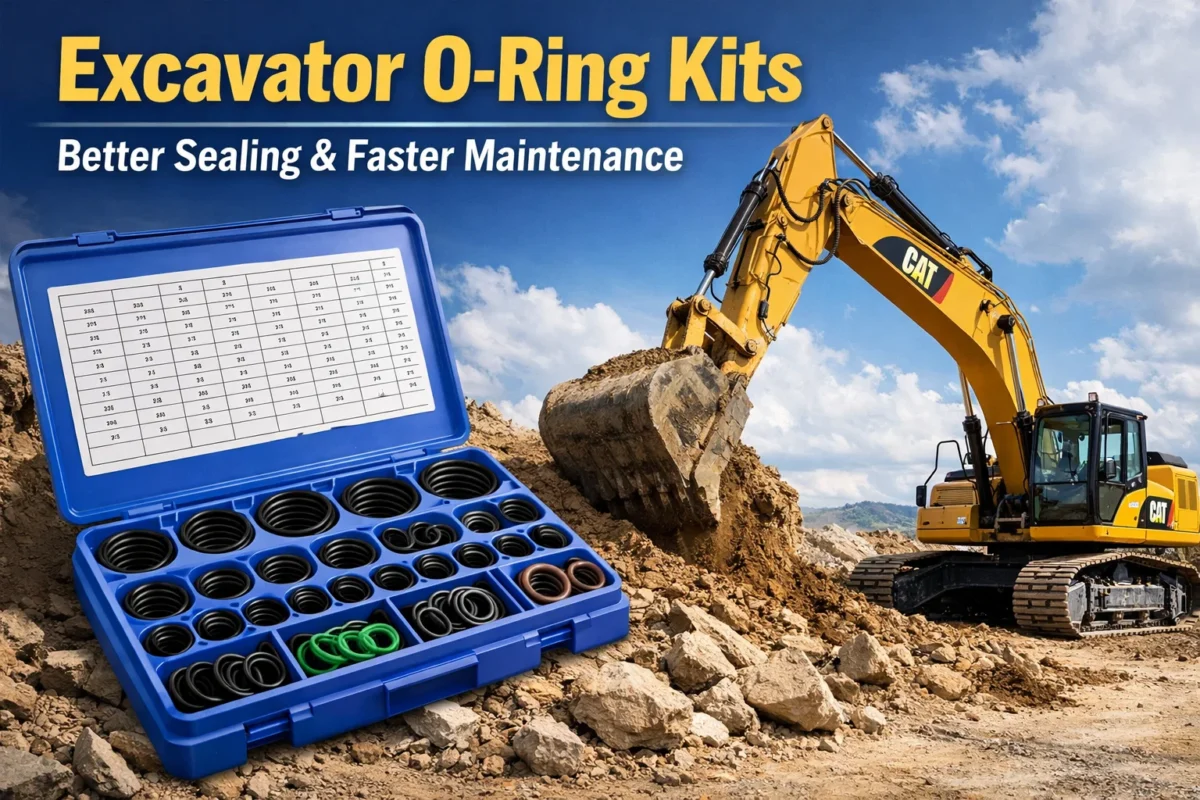
In the field of construction machinery maintenance and spare parts procurement, the stability of hydraulic systems is always crucial for equipment operation. O-ring kit, as one of the most basic and widely used sealing elements, are present in almost every hydraulic cylinder and sealing connection. Whether it's an excavator, bulldozer, or other tracked equipment, once O-ring age, wear, or fail, it often directly leads to oil leaks, pressure drops, or even downtime. Therefore, more and more customers are no longer solely focused on price when choosing suppliers, but are beginning to delve into the O-ring manufacturing process and quality control, such as the production process of excavator O-ring and the manufacturing process of O-ring for hydraulic seals. Compared to simple cost factors, purchasers are more concerned with product consistency, batch stability, and long-term supply reliability.

From an engineering perspective, the performance of O-ring does not depend on a single process, but is a systemic result determined by the material system, vulcanization behavior, dimensional control, and post-processing precision. Especially in high-pressure dynamic sealing environments such as hydraulic cylinders, O-ring need to operate under compression for extended periods; any minute deviation can be amplified, ultimately affecting the overall sealing reliability of the machine. Next, we will analyze the O-ring manufacturing process in detail, using KINTON SEALS' actual production process as an example.

I. Rubber Mixing

Rubber mixing is the first step in O-ring production and a crucial step determining material properties.

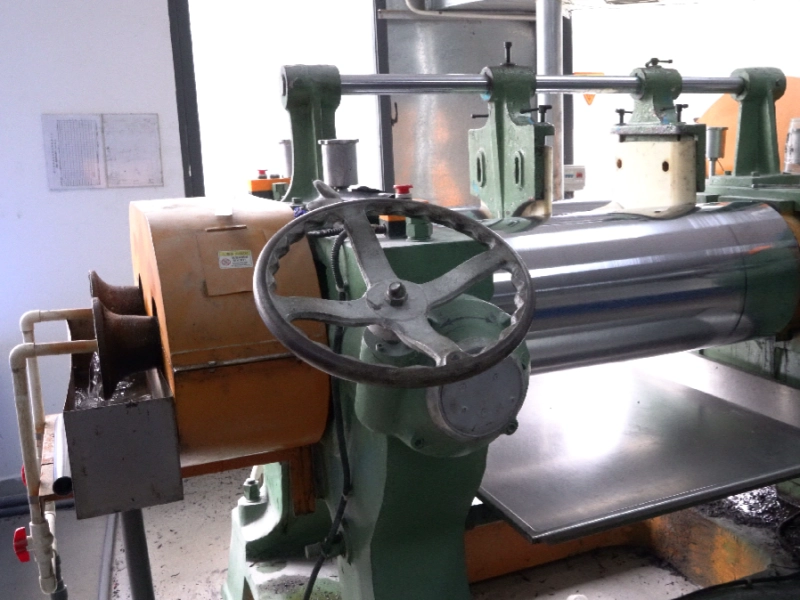
In actual production, different base materials (such as NBR, FKM, etc.) need to be formulated according to application conditions (oil resistance, temperature resistance, pressure resistance), and thoroughly dispersed with reinforcing fillers (such as carbon black), plasticizers, and anti-aging systems in the open mill. For O-rings, the material's elastic recovery and compression set properties are particularly critical.

The core of mixing is not just "mixing," but ensuring uniform filler distribution and stable molecular chain structure. Uneven dispersion can lead to localized stress concentration, manifesting as early cracking, insufficient rebound, or abnormal wear during long-term compression or dynamic sealing.

Simultaneously, mixing temperature and time also affect the pre-vulcanization state of the rubber, thus having a cascading effect on subsequent vulcanization reactions and final physical properties.

II. Rubber Performance Testing

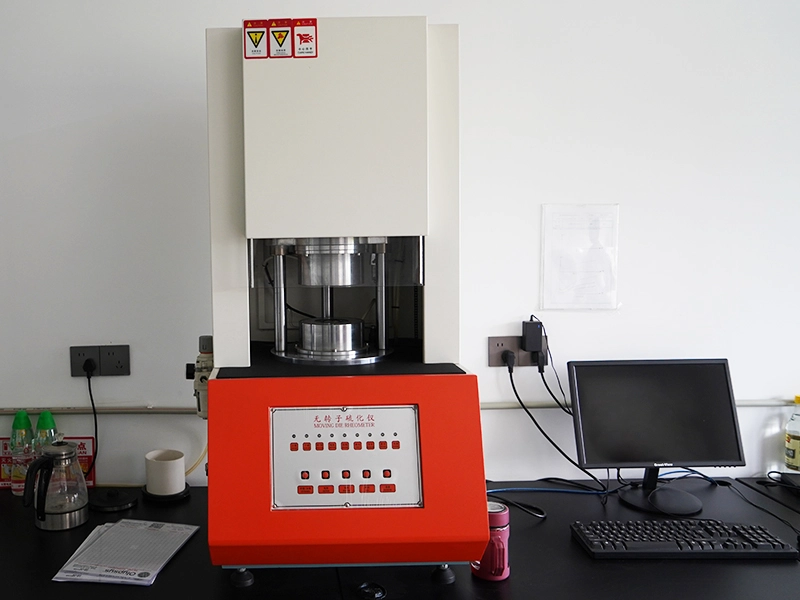
Before entering the molding stage, rubber materials must undergo systematic testing using a Moving Die Rheometer (MDR).

This test simulates the torque changes of rubber under high-temperature vulcanization conditions, generating a complete vulcanization curve to evaluate the material's crosslinking reaction process. Analysis of scorch time, positive vulcanization time, and maximum torque value determines whether the material is suitable for the O-ring molding process window.

This step is particularly critical because O-rings typically rely on a stable compression ratio to achieve a sealing effect. Unstable vulcanization can lead to fluctuations in hardness or abnormal resilience, thus affecting sealing performance.

MDR testing allows for locking in the processing window before the material enters the mold, avoiding under-vulcanization or over-vulcanization issues and controlling product consistency from the source.

Vulcanization: Controlling O-ring Dimensional Accuracy

The sealing performance of O-rings is highly dependent on their cross-sectional diameter and inner diameter; therefore, dimensional accuracy is crucial during the molding stage.

O-Ring Automatic Pre-former

Automatic Pre-former

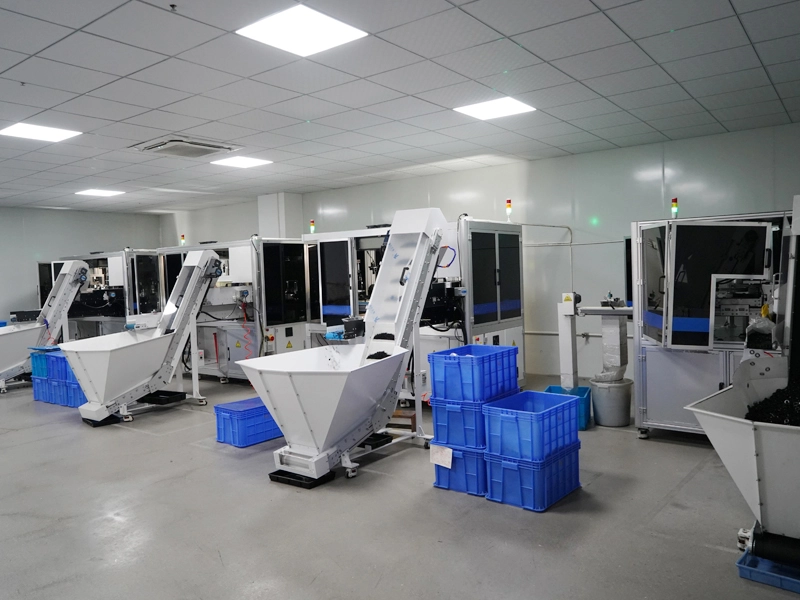
Automatic pre-forming equipment precisely cuts the rubber compound, ensuring each blank is highly consistent in weight and volume. This step directly affects the stability of the O-ring's cross-sectional dimensions and determines the uniformity of its compression ratio after installation.

Seal Compression Molding

Compression Molding

During compression molding, the rubber compound undergoes a cross-linking reaction under high temperature and pressure, ultimately forming a stable elastic structure. Mold precision, temperature uniformity, and pressure distribution directly affect the dimensional tolerances and roundness of the O-ring.

Improper control at this stage can lead to dimensional deviations in the O-ring, resulting in insufficient or excessive compression during actual installation, thus causing leakage or shortened lifespan.

IV. Automatic Deflashing and Trimming

After molding, O-rings often have burrs or parting lines remaining. These minor defects can become the starting point for leakage in sealing applications.

Automatic deflashing and trimming processes remove excess material, improving product appearance consistency and contact uniformity. For O-rings, the parting line height and surface finish directly affect the sealing contact.

Uneven trimming can lead to abnormal local contact stress, resulting in micro-leakage or abnormal wear during initial use. Therefore, a stable automated trimming process plays a crucial role in improving the sealing reliability of O-rings.

V. Automated Inspection System

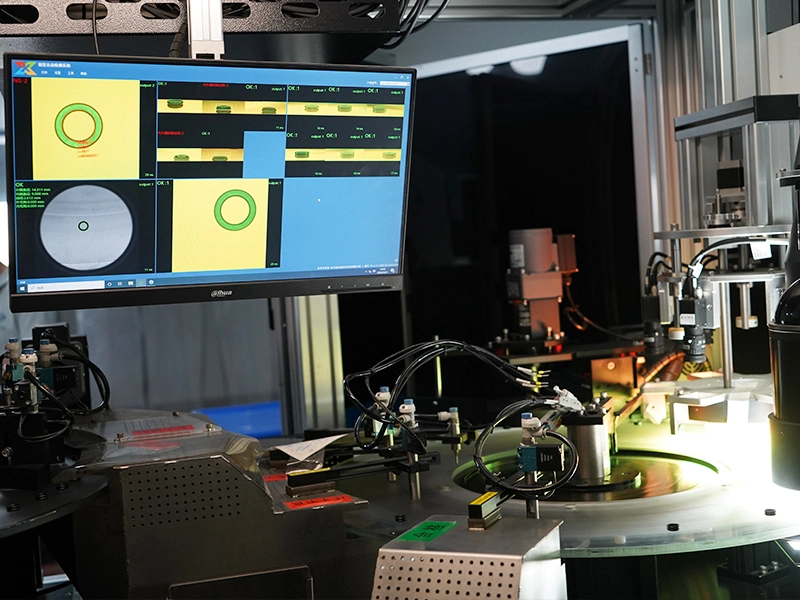
Traditional manual inspection struggles to meet high consistency requirements, while automated image inspection systems enable rapid full inspection of O-rings.

Through visual recognition technology, issues such as dimensional deviations, surface defects, burr residue, and irregular shapes can be detected, allowing for large-scale screening in a short time. This is particularly important for high-volume, standardized products like O-rings.

Automated inspection not only improves efficiency but also significantly reduces human error, ensuring higher consistency and controllability for each batch of products.

VI. Manufacturing Process Determines Final Performance

In actual use, seal failure often manifests as oil leakage, deformation, or accelerated wear. However, the root cause usually stems from insufficient attention to detail in the manufacturing process, such as:

  • Uneven mixing leading to unstable material properties
  • Molding errors causing poor seal fit
  • Poor trimming affecting initial sealing performance
  • Inadequate detection allowing defects to enter the market

Therefore, a stable manufacturing process essentially reduces uncertainty at every stage.

Kinton Seals' Consistent quality stems

For O-ring products, the real difference in quality lies not in appearance, but in the underlying material control and manufacturing system. From rubber mixing and vulcanization behavior control to precision molding and automated inspection, every step directly affects the final sealing effect.

At KINTON SEALS, we continuously improve the consistency and reliability of our O-ring products through standardized production processes, automated equipment, and a rigorous quality control system. Whether it's hydraulic cylinder sealing systems or various engineering machinery applications, we can provide stable supply and OEM-level quality assurance.

If you are looking for a long-term, stable O-ring supplier, or wish to optimize your existing sealing solutions, please contact the KINTON SEALS team. We will provide more suitable product recommendations and technical support based on your specific operating conditions.