
Product Applications

Why Material Selection Matters in Hydraulic Seals: PU, NBR, and PTFE Explained

Material Selection Matters in Hydraulic Seals

In hydraulic systems for construction machinery, many users prioritize size and model matching when selecting seals. However, the true determinant of seal kit life and stability is often the material itself. For excavators, bulldozers, hydraulic cylinders, and various hydraulic equipment, hydraulic seals operate under high pressure, high frequency, high temperature, and oily conditions. If the material selection is inappropriate, even with perfectly correct dimensions, leaks, wear, and even seal failure can occur quickly. This is why more and more maintenance companies, equipment managers, and parts suppliers are paying attention to hydraulic seal materials. Especially in modern high-pressure hydraulic systems, performance differences between sealing materials directly affect equipment operational stability.

The Specialization of Hydraulic Seal Materials

Many users believe that as long as the seal dimensions are consistent, the differences between different materials are minimal.

However, in reality, different hydraulic system operating conditions have completely different requirements for material performance. High-pressure conditions prioritize resistance to extrusion, high-frequency operations emphasize wear resistance, and high-temperature environments rely heavily on the material's thermal stability.

If the material selection is inappropriate, even if the seals function normally initially, they may fail rapidly due to hardening, expansion, wear, or permanent deformation. Many hydraulic system leaks are not fundamentally due to dimensional errors, but rather to materials that are unsuitable for the actual operating conditions. Therefore, in modern engineering machinery hydraulic systems, material selection has become a crucial part of seal design, not just an "additional parameter."

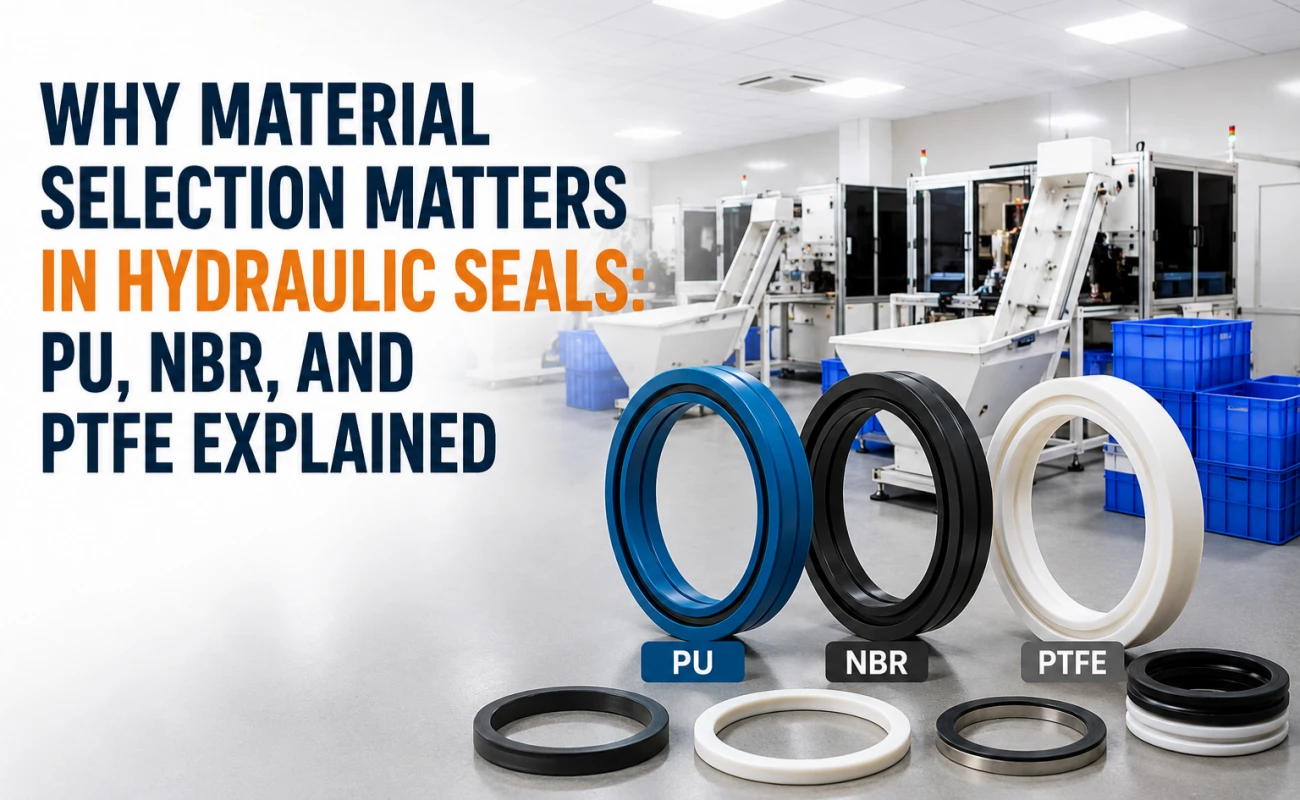
PU (Polyurethane)

In current engineering machinery hydraulic systems, PU is a widely used sealing material, especially common in cylinder sealing systems.

Compared to ordinary rubber materials, PU's biggest advantage lies in its superior wear resistance and high mechanical strength. Therefore, it typically offers a longer service life in high-pressure and high-frequency reciprocating motion environments.

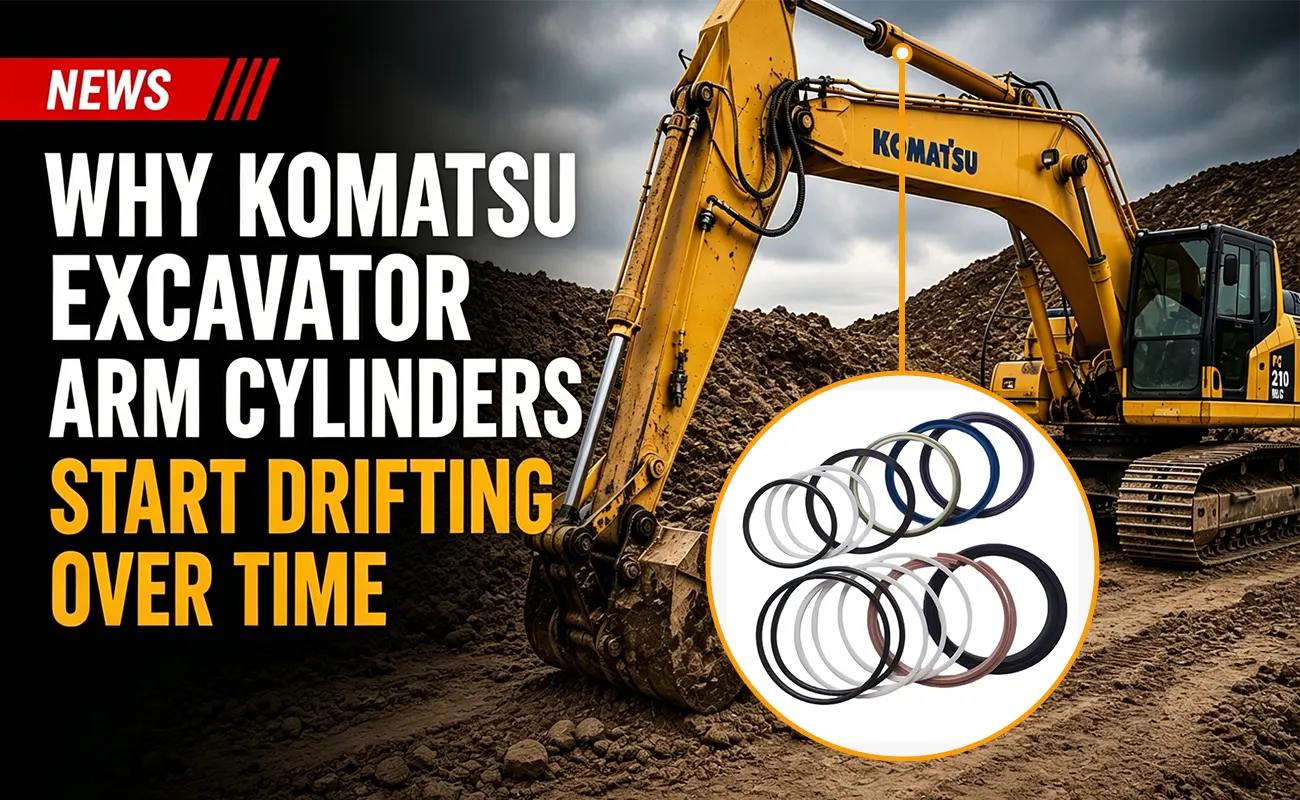
Many excavator cylinders use PU materials for piston seals, rod seals, and dust seals. PU's wear resistance advantage is even more pronounced in high-dust environments such as mines and quarries.

However, PU's adaptability to high-temperature environments is relatively limited. If a hydraulic system operates at high oil temperatures for extended periods, the properties of its materials may gradually degrade. Therefore, PU is more suitable for applications requiring high wear resistance and shock resistance.

NBR (Nitrile Butadiene Rubber)

NBR is arguably one of the most widely used materials in hydraulic systems.

Its greatest advantage is its stable oil resistance and relatively reasonable cost, making it widely used in O-rings, static seals, and general hydraulic system sealing structures. For most standard engineering machinery applications, NBR is sufficient for basic sealing requirements.

Compared to PU and PTFE, NBR is more of a general-purpose material. While it possesses good overall performance, its durability gradually diminishes under high temperatures, high pressures, and extreme conditions.

Especially when hydraulic systems operate at high temperatures for extended periods, NBR is more prone to hardening and aging. Therefore, in modern high-performance hydraulic systems, higher-grade materials are increasingly replacing traditional NBR in many critical locations.

PTFE (Polytetrafluoroethylene)

PTFE is a crucial material in modern high-end hydraulic systems.

Compared to traditional rubber materials, PTFE's most significant characteristic is its extremely low coefficient of friction, coupled with excellent high-temperature resistance and chemical resistance. Therefore, in high-pressure, high-speed, and high-precision hydraulic systems, PTFE effectively reduces frictional resistance and minimizes sealing heat generation.

Many high-performance hydraulic devices utilize PTFE structures in their Glyd Rings, Step Seals, and high-speed piston seals. Especially in modern electro-hydraulic systems, its low frictional characteristics have a significant impact on responsiveness and control accuracy.

However, due to PTFE's inherently low elasticity, it often needs to be used in combination with rubber elastomers to ensure sufficient sealing preload. This is why many PTFE seals are actually composite structures, not single-material components.

Different Materials Work Together in The Same Hydraulic System

In practical hydraulic systems, a complete sealing solution is usually not made of a single material.

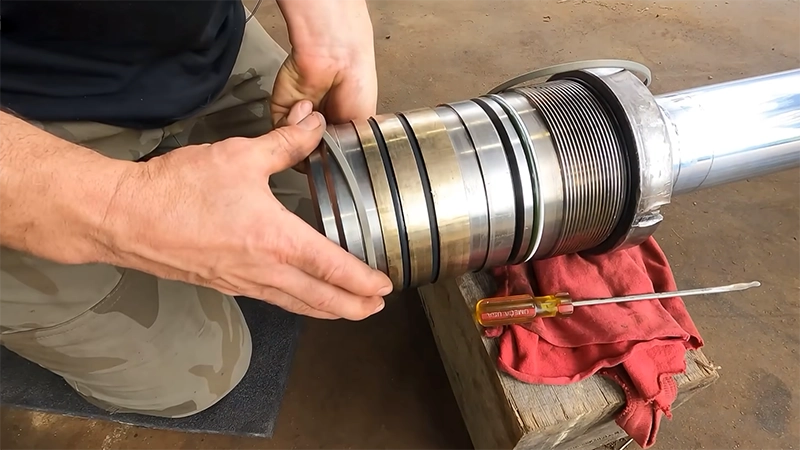
For example, an excavator cylinder might contain PU rod seals, NBR O-rings, and PTFE guide seals simultaneously. Because these different locations perform different functions, the requirements for material properties also differ.

Some locations require stronger wear resistance, some emphasize low friction, and others prioritize static seal stability. Therefore, truly mature hydraulic seal designs often involve a combination and matching of materials, rather than relying solely on a single material.

Sealing Materials

In the past, many users focused on model and price when purchasing seals. However, as modern hydraulic systems experience increasingly higher pressures and more complex control precision, the impact of material properties on seal lifespan has become increasingly significant.

Especially for mining equipment, heavy-duty excavators, and high-frequency hydraulic systems, material selection is no longer just about "installation feasibility," but rather long-term stable operation.

Therefore, more and more customers are now focusing on:

  • Sealing material type
  • Temperature range
  • Wear resistance
  • Operating condition compatibility

Compared to simply low price, stability and long-term lifespan have become more important purchasing criteria.

Conclusion

For modern hydraulic systems, the choice of sealing materials directly determines system stability and service life. PU, NBR, and PTFE each have different characteristics and cater to different operating conditions. A truly reliable sealing solution is not simply about choosing a single material, but rather about a rational match based on the equipment's operating conditions and the hydraulic system's requirements.

At KINTON Seals, we continuously provide a variety of sealing material solutions for engineering machinery hydraulic systems, including PU, NBR, PTFE, and various composite hydraulic seal products. Through stable material control and practical application experience, we are committed to helping customers improve the reliability of their hydraulic systems and reduce long-term maintenance costs.