
News
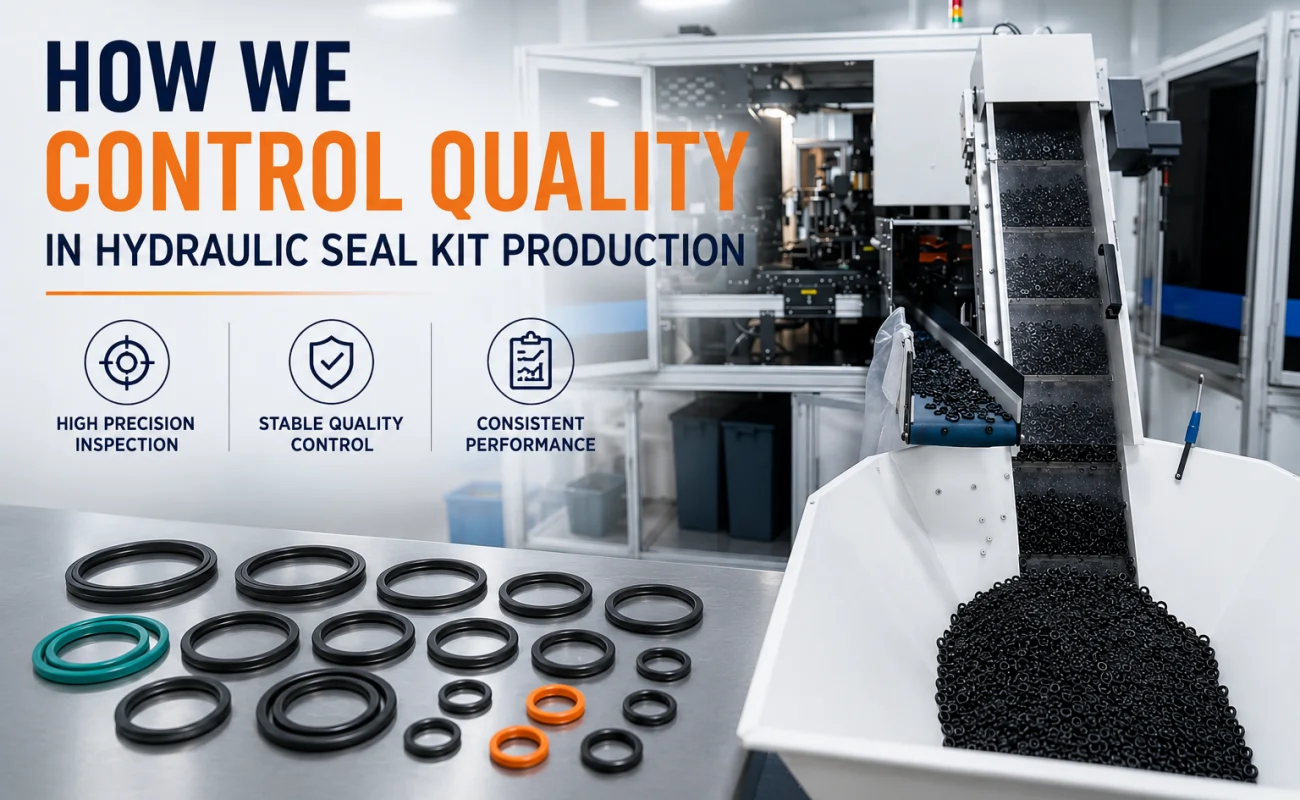
How We Control Quality in Hydraulic Seal Kit Production

In hydraulic systems for construction machinery, many users focus on the material, size, or installation location of the hydraulic seals. However, a crucial but often overlooked factor that truly impacts seal kits stability is quality inspection. For excavators, bulldozers, and various hydraulic equipment, a seemingly minor seal defect can be amplified under high-pressure conditions. This can lead to minor issues like oil leaks and weak operation, or even complete system downtime for repairs. Therefore, more and more overseas customers are paying close attention to manufacturers' stable quality control capabilities when purchasing Hydraulic Seal Kits.
Especially in modern high-pressure hydraulic systems, seals not only need to be dimensionally accurate but also ensure surface integrity, material stability, and batch consistency. Therefore, for a professional hydraulic seal manufacturer, quality control is not just "factory inspection" but a vital part of the entire production process.
Quality Stability Requirements for Hydraulic Seals
Compared to ordinary industrial rubber parts, hydraulic seals operate under high pressure, high-frequency motion, and in oily environments for extended periods. Especially for excavator cylinders, hydraulic pumps, and travel systems, seals often need to withstand continuous pressure changes and frictional wear.
Under these conditions, even minor burrs, dimensional deviations, or material defects can lead to the following problems during subsequent use:
- Oil leakage
- Abnormal wear of the sealing surface
- Unstable pressure
- Premature aging of seals
Many hydraulic system failures, seemingly equipment problems, may actually have started as a minor sealing defect.
Therefore, for hydraulic seals, what truly matters is not just "installability," but long-term stable operation.
Automated Visual Inspection System
As the precision requirements of hydraulic systems increase, traditional manual visual inspection is no longer sufficient to meet the demands of high-volume seal production.
Therefore, fully automated visual inspection systems are becoming increasingly important in modern hydraulic seal manufacturing.
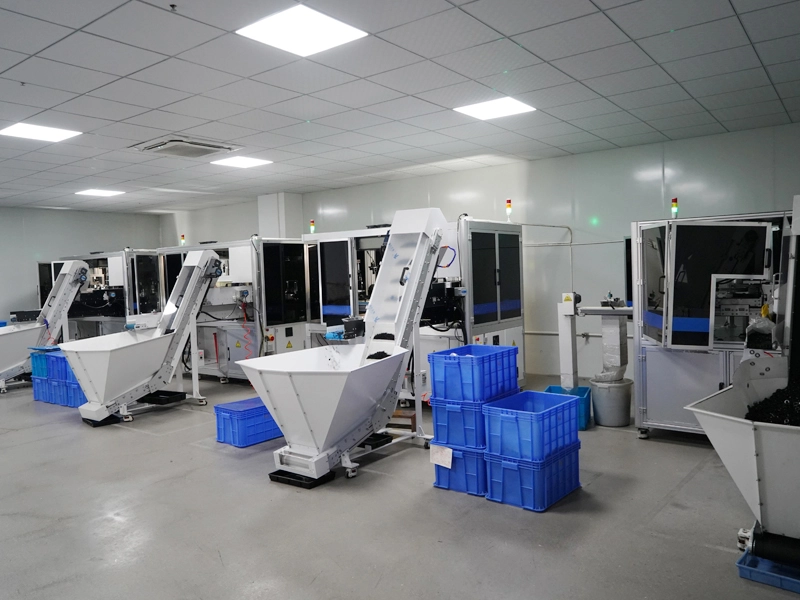
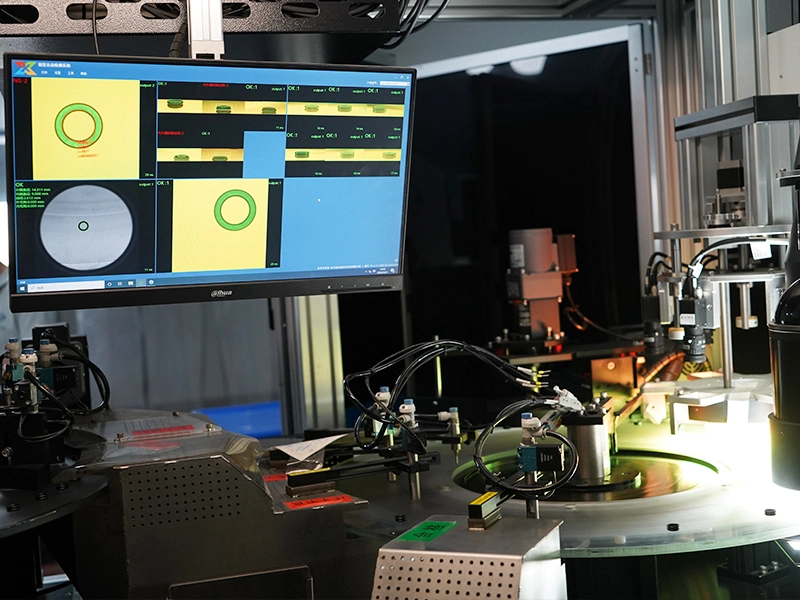
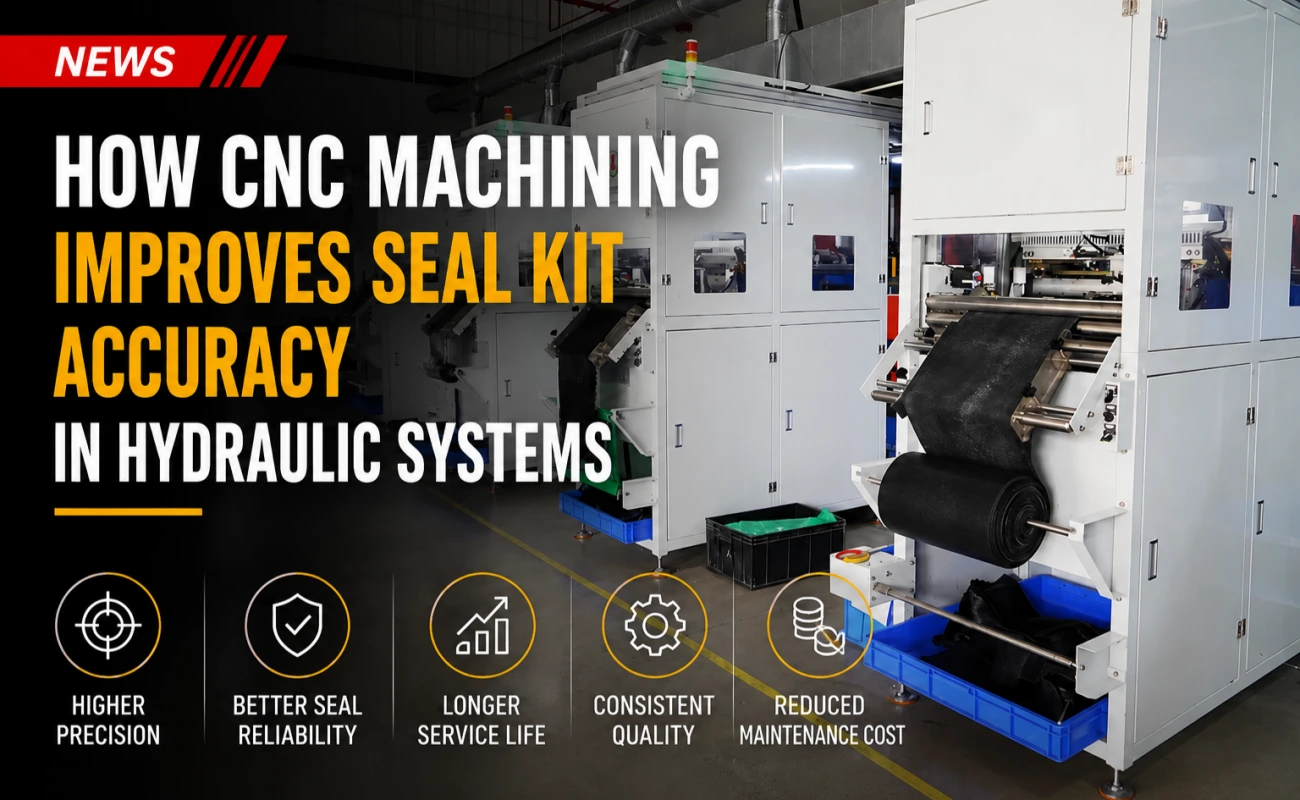
In our fully automated visual inspection workshop, seals undergo automatic identification and screening based on their appearance using high-speed visual inspection equipment. The system will focus on detecting:
Rough edges, notches, surface cracks, dimensional anomalies, and molding defects.
Compared to traditional manual sampling, automated image screening can perform more stable and consistent inspections on a large number of products during high-speed production. Especially for small-sized products in O-rings, oil seals, and hydraulic sealing kits, many subtle defects are not easily identified reliably by the naked eye, while automated image systems can effectively reduce the risk of missed detections.
Manual Quality Inspection Still so Important
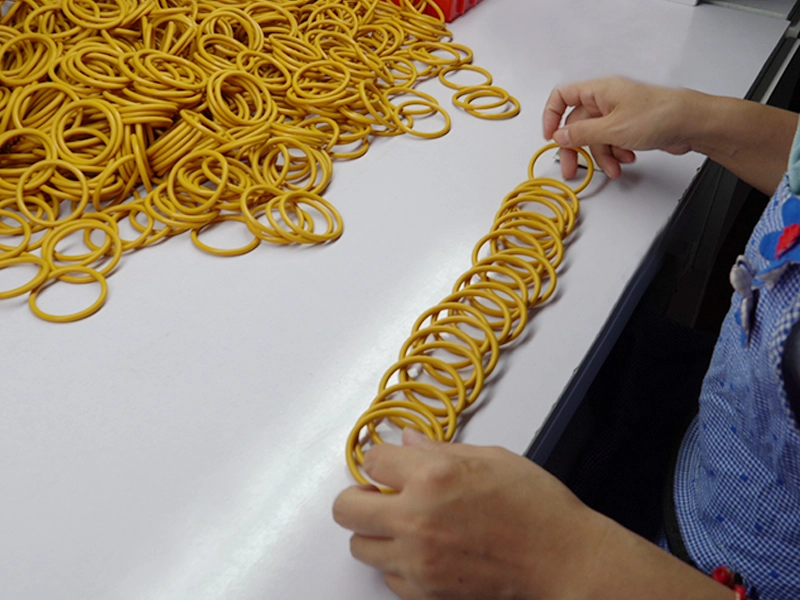
Although automated inspection equipment is becoming increasingly sophisticated, manual quality inspection remains irreplaceable in the hydraulic sealing industry.
This is because many sealing issues are not merely dimensional or appearance defects, but also involve material condition, surface feel, and the integrity of details. Experienced quality inspectors can often spot problems that automated equipment cannot fully diagnose.
Therefore, in actual production, we usually combine automated image screening with manual quality inspection.
For example, after automatic screening, some key products still undergo manual re-inspection for further confirmation:
- Sealing lip integrity
- Surface uniformity
- Elasticity
- Molding stability
Especially for export markets and demanding customers, multiple quality inspection processes can further improve product stability.
Quality Control
Many people believe that quality inspection is only the final check before product packaging, but in reality, truly stable hydraulic seal quality often comes from control throughout the entire manufacturing process.
From rubber compounding, material ratios, temperature control, and vulcanization stability already affect the performance of subsequent products. Subsequently, in molding, trimming, and subsequent processing, each step can affect the final sealing effect.
Therefore, for hydraulic seal manufacturing, quality control is not a single department, but a systematic management throughout the entire production process.
Manufacturer Quality Inspection Capabilities
In the past, many customers focused more on model and price when purchasing seals.
However, as modern hydraulic systems experience increasingly higher pressures, customers have gradually realized that what truly affects equipment stability is often not whether the dimensions match, but whether the product consistency is stable.
Especially for mining equipment, heavy-duty excavators, and high-frequency hydraulic systems, even minor quality fluctuations within a batch can affect subsequent service life.
Therefore, more and more customers are now focusing on:
Whether the equipment has automated testing facilities
- Whether there is a manual re-inspection process
- Whether batch consistency can be maintained
- Whether the equipment has stable production management capabilities
Compared to simply offering the lowest price, long-term stability has become a more important procurement criterion.
Conclusion
For hydraulic seals, stable quality control not only affects the product itself but also directly impacts the long-term reliability of the equipment's hydraulic system. From automated image screening to manual quality inspection, each inspection process helps reduce the risk of leakage and failure during later use.
At KINTON SEALS, we continuously optimize the production and quality inspection processes for hydraulic seals, including fully automated image screening, manual re-inspection, and multi-stage production control. Through stable quality management and manufacturing experience, we are committed to providing more reliable hydraulic sealing solutions for global construction machinery customers.