

News
Volvo EC210B Swing Motor Oil Contamination: How Hydraulic Oil Leaks into the Swing Gearbox

Among 20-ton class excavators, the Volvo EC210B is widely known for its stable hydraulic performance and smooth swing control. However, after years of operation, some machines begin to show a puzzling symptom:
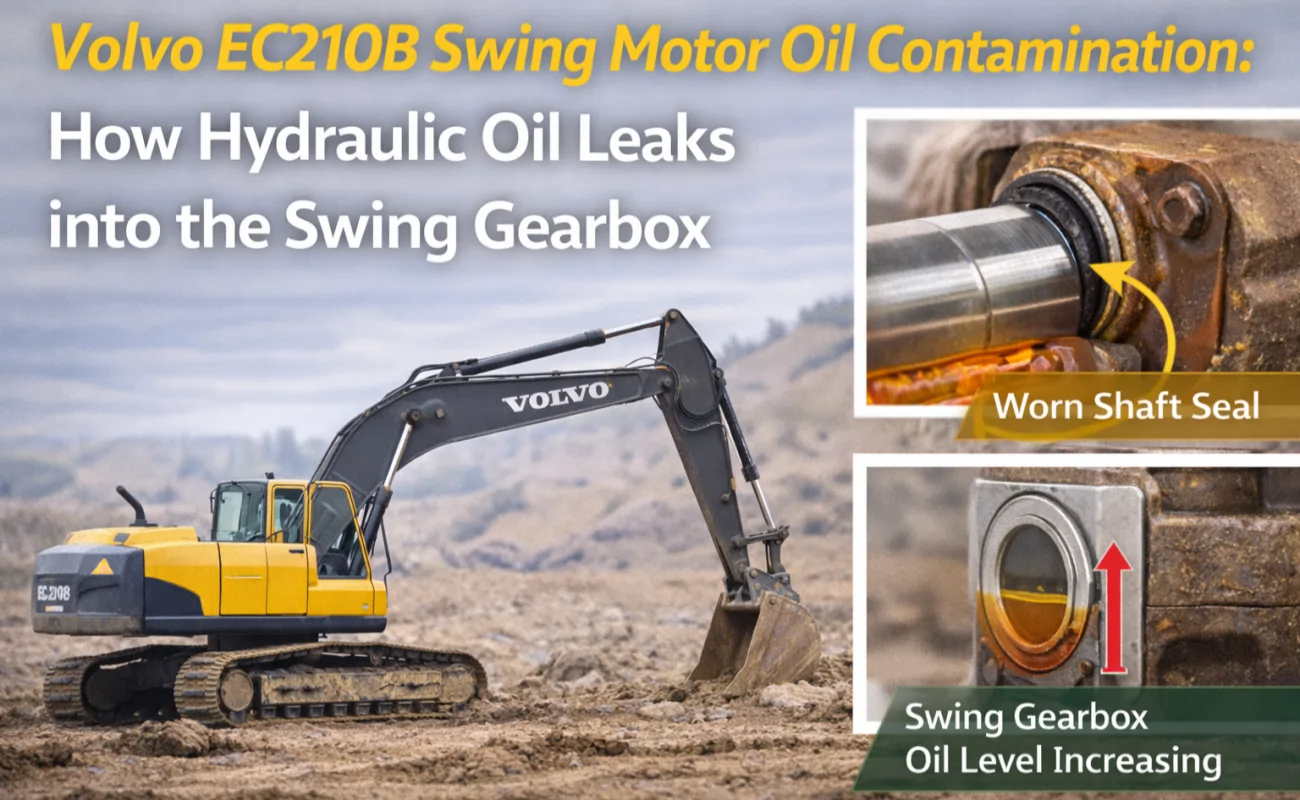
The oil level inside the swing reduction gearbox gradually rises, sometimes even exceeding the inspection window mark.
Many operators initially assume that the gearbox has simply been overfilled with gear oil. In reality, this is often a warning sign of a deeper issue — hydraulic oil is leaking into the swing gearbox through a failed motor seal.
This type of contamination can quietly damage the gearbox if it is not detected early.
Why the Gearbox Oil Level Increases
The Swing System Structure
The swing system of the EC210B consists of two key components:
- Hydraulic Swing Motor – converts hydraulic pressure into rotational torque
- Swing Reduction Gearbox – amplifies torque through a planetary gear system and transfers it to the slewing ring
Under normal conditions, hydraulic oil and gear oil operate in completely separate circuits.
The critical barrier between them is the shaft seal located at the motor output shaft.
Normal Operating Condition
When the shaft seal functions properly:
- Hydraulic oil circulates only inside the motor
- Gear oil lubricates the planetary gear set inside the gearbox
- Both oil systems remain fully isolated
What Happens When the Seal Fails
If the shaft seal deteriorates, high-pressure hydraulic oil begins to migrate along the motor output shaft and enter the gearbox housing.
Because hydraulic pressure is significantly higher than gearbox internal pressure, the flow is typically one-directional.
The result is a clear pattern:
- Gearbox oil level gradually rises
- Hydraulic tank oil level slowly drops
Over time, this contamination can alter the viscosity and lubrication properties of the gear oil, potentially leading to planetary gear wear or bearing damage.
The Real Working Conditions of a Swing Motor Shaft Seal
Swing motors operate in a far more demanding environment than typical low-speed transmission systems. The shaft seal must withstand several challenging conditions.
- High Rotational Speed
During continuous swing operations, the motor output shaft rotates at high speed.
The sealing lip remains in constant high-speed contact with the shaft surface, generating friction and heat. - Rapid Pressure Fluctuations
Heavy swing loads or sudden braking can create instantaneous pressure spikes within the hydraulic system.
These pressure changes produce back-pressure variations that stress the seal structure. - Elevated Operating Temperatures
Extended swing operation can increase the temperature of the motor housing, affecting seal elasticity and long-term stability.
Why Standard Oil Seals Often Fail Over Time
Under these operating conditions, conventional single-lip oil seals are prone to several forms of degradation:
- Lip fatigue from long-term friction
- Spring tension reduction
- Edge hardening caused by heat
- Micro gaps forming between the seal lip and shaft surface
Once the preload force weakens, high-pressure hydraulic oil can begin to seep through these microscopic clearances.
This issue becomes even more common on machines with over 8,000 working hours, where the shaft surface may already show minor wear marks that further challenge sealing performance.
The Hidden Risks of Oil Mixing
An increasing gearbox oil level is only the first visible symptom. Once hydraulic oil and gear oil begin to mix, several mechanical risks can follow.
- Reduced Lubrication Performance
Hydraulic oil dilution can reduce the viscosity of the gear oil, leading to thinner lubrication films between gear teeth. - Additive Dilution
Gear oil contains specific anti-wear and extreme-pressure additives. Mixing with hydraulic oil weakens these protective properties. - Foaming and Heat Retention
Mixed oils may create bubbles or foam, reducing cooling efficiency and accelerating oil degradation. - Long-Term Mechanical Damage
If the condition continues unchecked, the gearbox may develop:
- Gear surface pitting
- Abnormal wear patterns
- Premature bearing failure
For this reason, an abnormal rise in gearbox oil level should always trigger an inspection of the swing motor shaft seal, rather than simply replacing the gear oil.
A More Durable Sealing Solution
For aging excavators like the EC210B, upgrading the sealing solution can significantly reduce the risk of oil contamination.
KINTON SEALS provides a double-lip FKM (Viton) high-pressure shaft seal specifically designed for swing motor applications.
Key design advantages include:
- Reinforced Double-Frame Structure
The dual-frame design improves structural rigidity, helping the seal maintain stability under high rotational speed. - High-Performance FKM Material
FKM rubber offers excellent resistance to:
- High temperatures
- Hydraulic oils
- Chemical degradation
This allows the seal to maintain elasticity in demanding environments.
- Optimized Lip Geometry
The sealing lip angle is engineered to maintain stable sealing performance even under pressure fluctuations and rotational stress. - Controlled Preload Force
Precise preload control ensures proper sealing even when minor shaft wear is present, extending the usable life of older machines.
Compared with conventional single-lip oil seals, the double-frame design performs far more reliably under combined high-speed and pressure-variation conditions.
Preventive Maintenance Is Always Cheaper Than Gearbox Repairs
When the swing gearbox oil level begins to rise abnormally, it usually indicates that the shaft seal is already losing effectiveness.
Continuing operation without addressing the problem can result in serious gearbox wear, where repair costs may far exceed the price of a timely seal replacement.
For machines that have been in service for many years, regularly monitoring the gearbox oil level trend is one of the most effective ways to detect early sealing issues.
Upgrading to a higher-pressure, high-temperature shaft seal can significantly reduce contamination risks and extend the service life of both the swing motor and the reduction gearbox.
If you need assistance confirming your swing motor model or seal specifications, feel free to provide the machine nameplate information and working conditions.
KINTON SEALS can recommend a sealing solution optimized for high-load swing systems and long-term reliability.