
News
NBR Seal Shelf Life: Why Unused Rubber Seals Can Still Fail

In the heavy equipment maintenance industry, many technicians assume that sealing components are stable inventory items that remain usable as long as they stay unopened. However, this assumption is not entirely accurate for rubber-based sealing materials.
Even when packaging remains intact and the seals have never been installed, rubber materials continue to undergo slow physical and chemical changes over time. If storage periods become too long or warehouse conditions are not ideal, seal performance may degrade before installation.
In the industry, this phenomenon is often referred to as the “invisible expiration” of rubber seals.
For Nitrile Butadiene Rubber (NBR) seals, the issue is particularly common. Many maintenance technicians have experienced situations where O-rings or oil seals stored for two or three years quickly begin leaking, hardening, or cracking shortly after installation. In most cases, the problem is not improper installation, but material aging that occurred during storage.
Why Rubber Seals Age During Storage
Polymer Structure Changes Over Time
NBR rubber is widely used in hydraulic systems thanks to its excellent oil resistance, abrasion resistance, and cost efficiency. It is commonly applied in:
- Hydraulic cylinders
- Pumps and valves
- Travel motors and gearboxes
- Excavator and bulldozer hydraulic systems
However, from a material science perspective, rubber is a polymer material, meaning its molecular chains are sensitive to environmental conditions. Over time, these chains gradually change structure due to chemical reactions with surrounding elements.
Environmental Factors That Accelerate Seal Aging
Several environmental factors commonly found in warehouses can accelerate rubber degradation.
- Ozone Exposure
Ozone is one of the most significant contributors to rubber aging. Even small concentrations of ozone in the air can react with rubber molecular chains, gradually reducing elasticity and forming microscopic surface cracks. These cracks are often invisible until the seal is compressed or stretched during installation. - Ultraviolet (UV) Light
UV radiation can also break down the molecular structure of rubber materials. When seal inventories are exposed to sunlight or strong lighting over long periods, the rubber surface may become brittle and lose flexibility. - Temperature and Humidity
Temperature and humidity fluctuations also influence the stability of rubber compounds.
- High temperatures accelerate oxidation reactions inside the material.
- Changes in humidity can affect the stability of plasticizers within the rubber formulation.
Over time, these factors can lead to hardening, reduced elasticity, and loss of sealing performance.
For this reason, many international sealing standards define strict requirements for rubber seal storage conditions.
Recommended Storage Conditions for Hydraulic Seals
In professional industrial warehouses, rubber sealing components are typically stored under controlled conditions designed to slow down aging.
Controlled Temperature and Light Protection
The recommended storage environment for most rubber seals includes:
- Temperature: 15°C – 25°C
- Avoid direct sunlight
- Minimize strong UV exposure
These conditions help preserve the elasticity and mechanical properties of the rubber.
Protection from Ozone Sources
Seals should remain in their original packaging whenever possible and be kept away from electrical equipment that may produce ozone, including:
- Electric motors
- Transformers
- High-voltage electrical devices
Even low levels of ozone generated by such equipment can gradually degrade rubber materials over time.
Inventory Rotation and Shelf-Life Management
For companies maintaining large spare parts inventories, proper inventory management is equally important.
A First-In, First-Out (FIFO) system helps prevent seals from remaining in storage beyond their recommended shelf life. Some professional suppliers also manage seal inventory using batch numbers and manufacturing date tracking, ensuring that products are used within the appropriate storage period.
How to Identify Aged Seals in Inventory
When the manufacturing date of a seal cannot be confirmed, technicians can still perform basic visual and tactile checks before installation.
Surface Bloom or Powder Residue
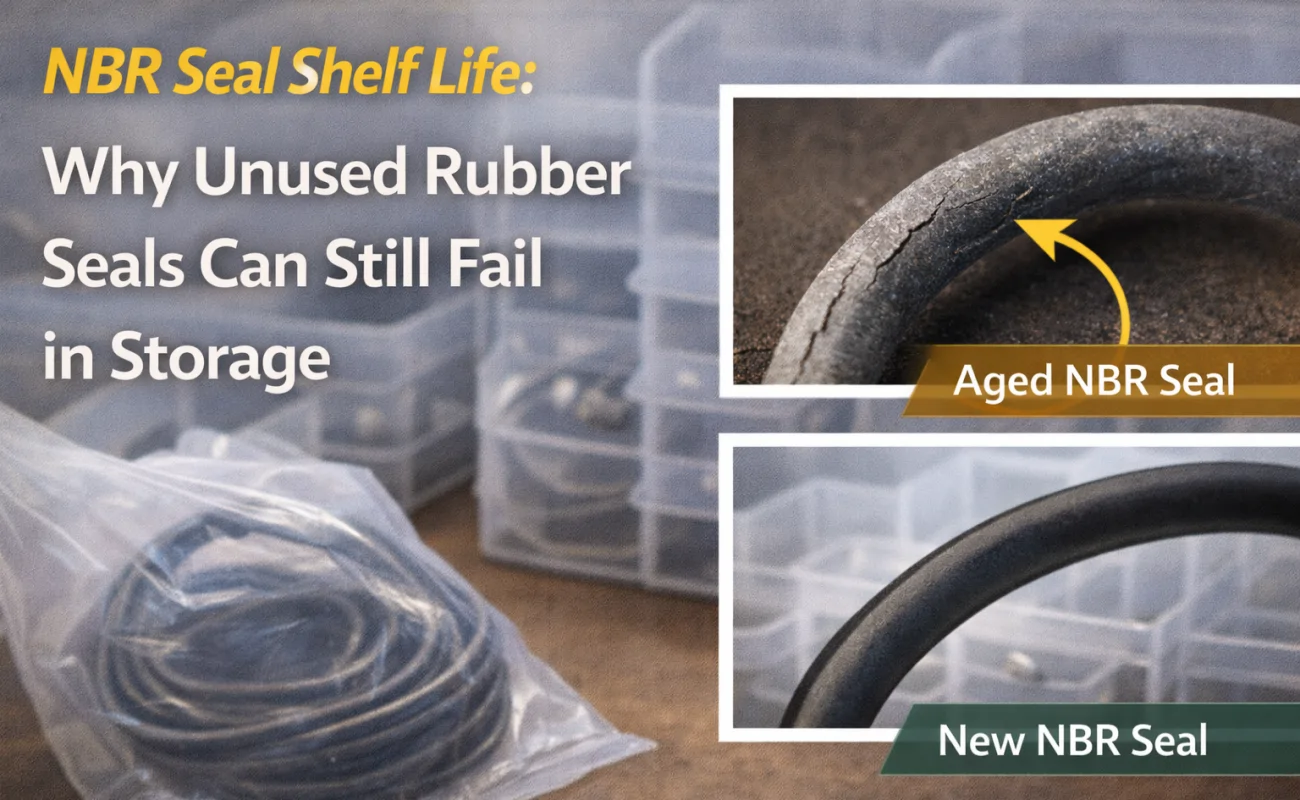
One common sign is the appearance of a white powder-like substance on the rubber surface. This phenomenon is usually caused by additives migrating out of the rubber compound during long-term storage.
While it may appear harmless, it often indicates internal chemical changes within the material.
Hardness Changes
A healthy NBR seal should feel elastic and responsive when pressed. If the rubber feels noticeably harder or rebounds slowly after compression, the material may already be aging.
Visible Micro-Cracks
Another warning sign is the appearance of fine cracks, especially when the seal is bent or stretched. Even if the seal appears intact under normal conditions, these cracks indicate that the material structure has begun to degrade.
Seals showing these symptoms are not recommended for installation.
“Unused” Does Not Mean “Like New”
Although seals are small components, they play a critical role in the reliability of heavy machinery. A single degraded O-ring or oil seal can cause hydraulic leakage, contamination, or pressure loss, potentially affecting the performance of the entire system.
For maintenance companies and spare parts suppliers, proper seal storage management and inventory control are just as important as product quality.
Only when seals are stored under appropriate environmental conditions and used within their recommended shelf life can they fully deliver their intended sealing performance.
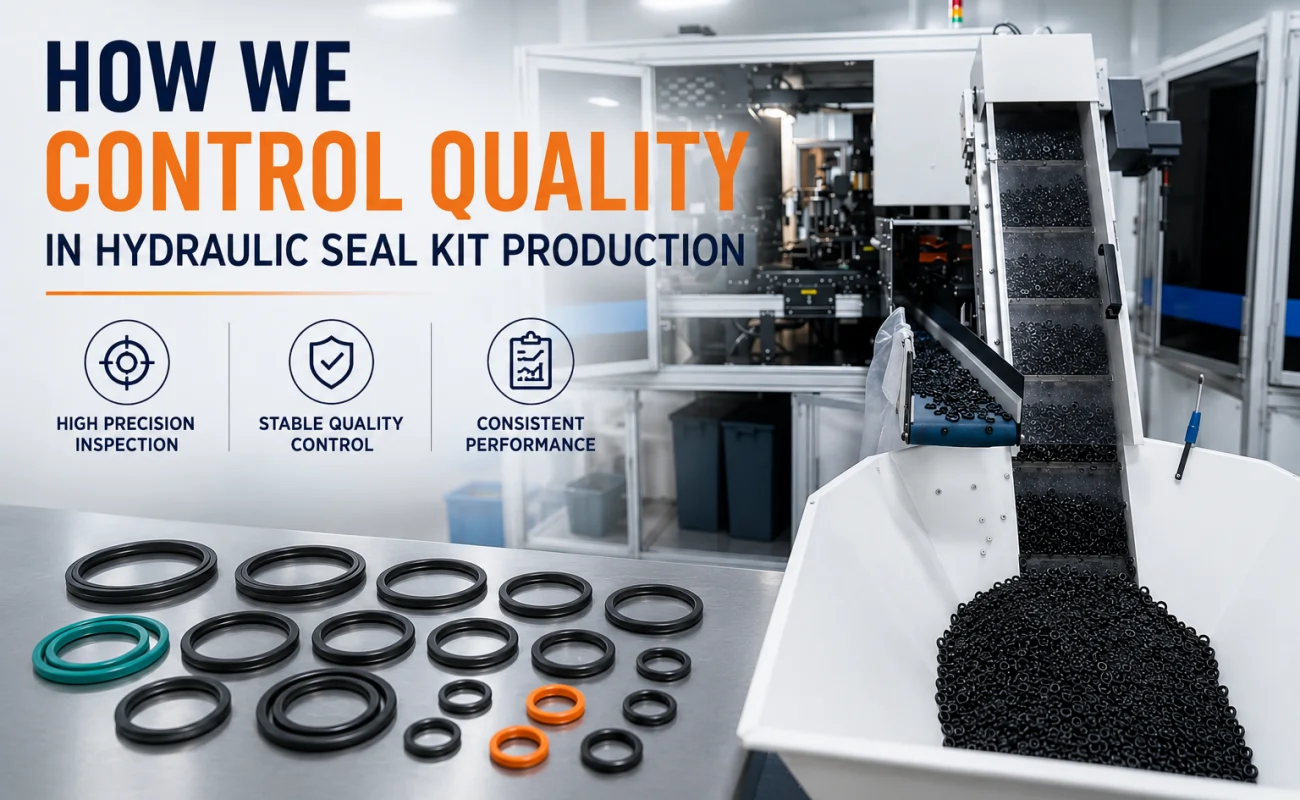
At KINTON SEALS, storage and inventory management follow strict rubber material preservation standards. Temperature, light exposure, and stock rotation are carefully controlled to ensure that every seal kit shipped maintains stable material performance.
If you encounter issues such as seal leakage, abnormal hardening, or premature aging, you can contact us with the seal size or model number.
KINTON SEALS supplies a wide range of hydraulic seals and O-ring solutions and supports global shipping for equipment maintenance needs.