
News
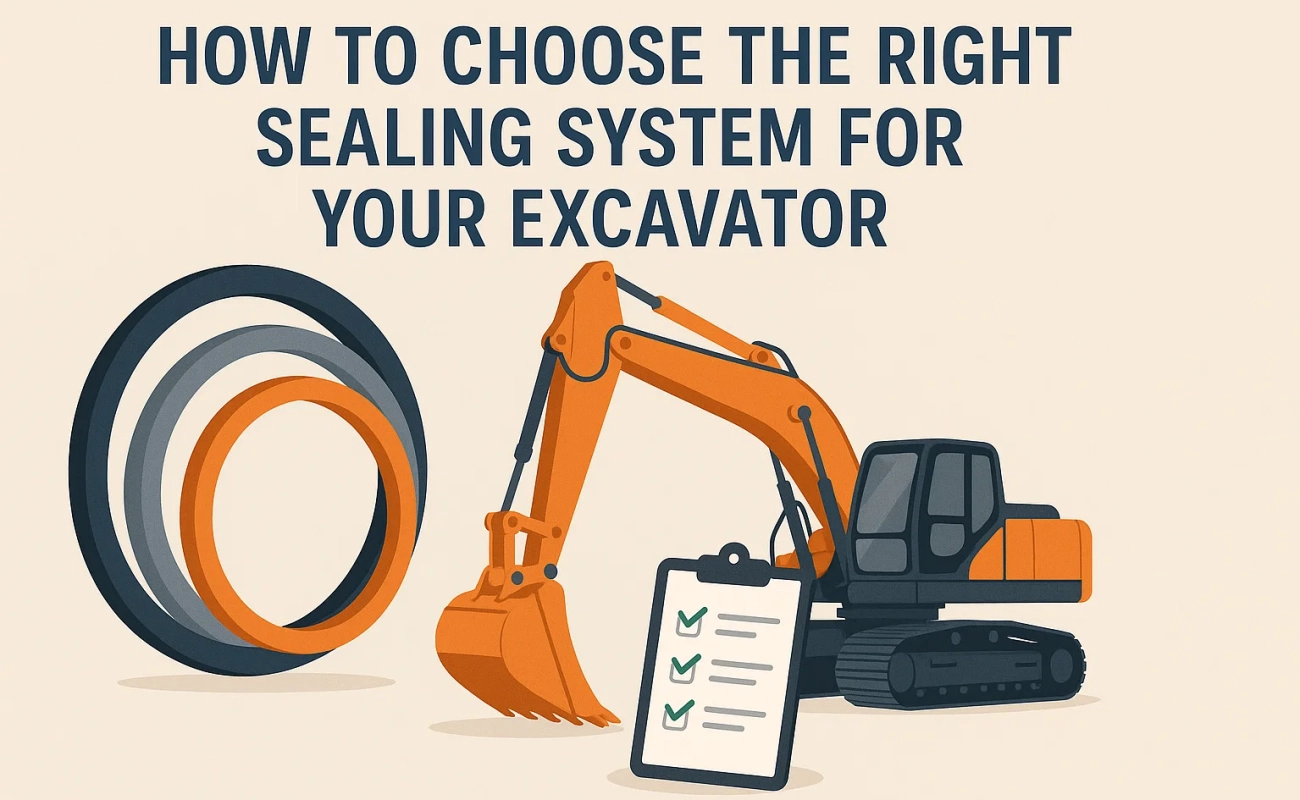
How To Choose The Right Sealing System for Your Construction Machine?

In heavy equipment maintenance and overhaul, the choice of sealing components often determines performance and service life. However, treating all machine seals as “universal parts” is a common mistake. Loaders, backhoe loaders, and bulldozers operate under vastly different hydraulic loads, movement patterns, and environmental conditions—requiring seal materials, structures, and models to be selected with precision.
KINTON SEALS provides this guide to help you understand the core sealing requirements of various machinery systems, avoid selection pitfalls, and ensure reliable and efficient operation.
Choosing Between Dynamic and Static Loads
A construction machine’s hydraulic system generally consists of two major sections — the travel/drive system and the working equipment. These systems differ greatly in their sealing demands.
| Mechanical System | Typical Components | Main Operating Features | Core Seal Requirements | Common Failure Modes |
|---|---|---|---|---|
| Working Equipment | Lift cylinders, tilt cylinders, ripper cylinders, hydraulic hammers | High-pressure, high-frequency reciprocating motion, strong impact load | Excellent pressure resistance, anti-extrusion, low friction, long service life | Piston rod lip wear, seal extrusion under high pressure |
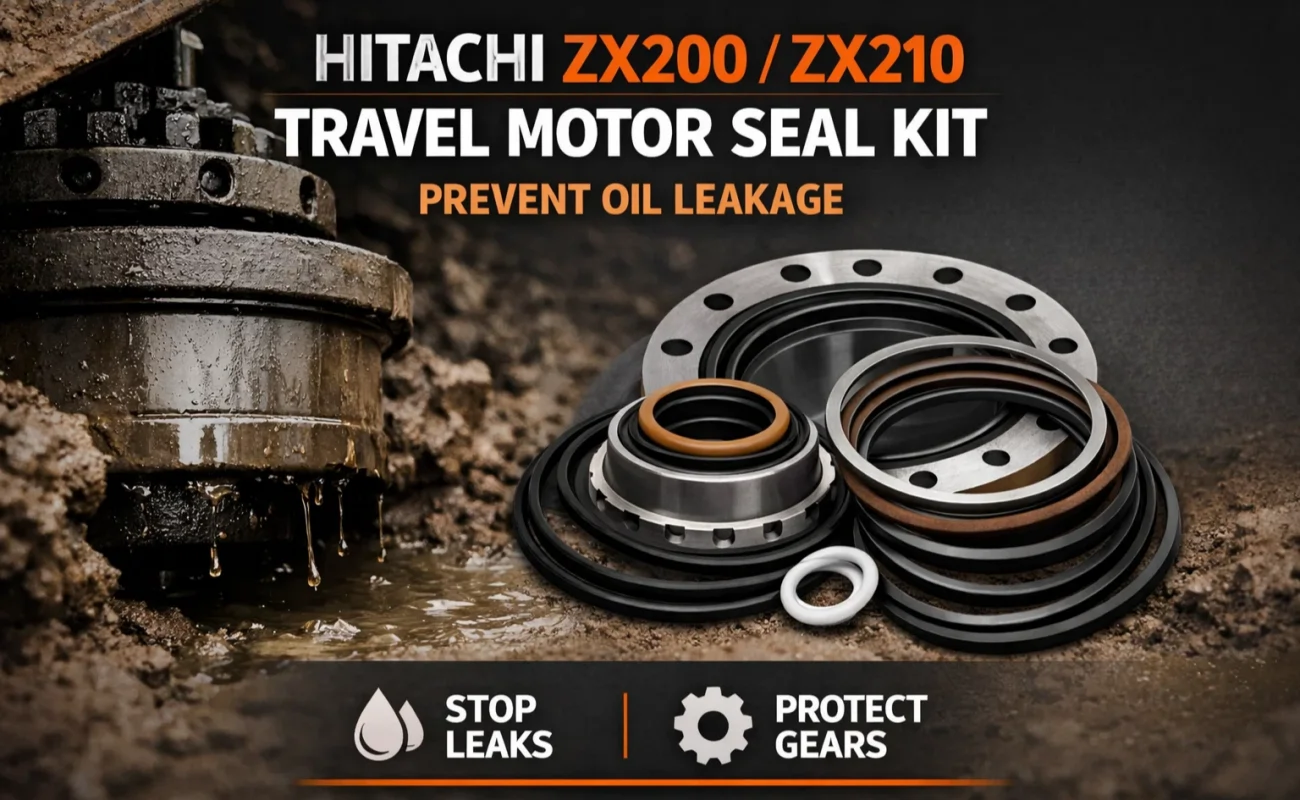
| Travel System | Travel motors, gear reducers, drive axle oil seals, transfer case | Low-speed, high-torque, long-duration operation in dusty and muddy environments | Outstanding wear and oil resistance, high static sealing performance | Shaft wear, seal hardening, contamination ingress |
Focus on Pressure and Impact Resistance
For loaders and backhoes, the working cylinders bear tremendous lifting, digging, and loading forces. Their seals must withstand both the peak hydraulic pressures (often exceeding the rated working pressure) and high-frequency reciprocation.
- Material Focus:
Use NBR (Nitrile Rubber) or PTFE (Polytetrafluoroethylene) with high modulus and excellent extrusion resistance. In high-temperature areas (e.g., near the engine), FKM (Fluorocarbon Rubber) should be considered. - Structural Focus:
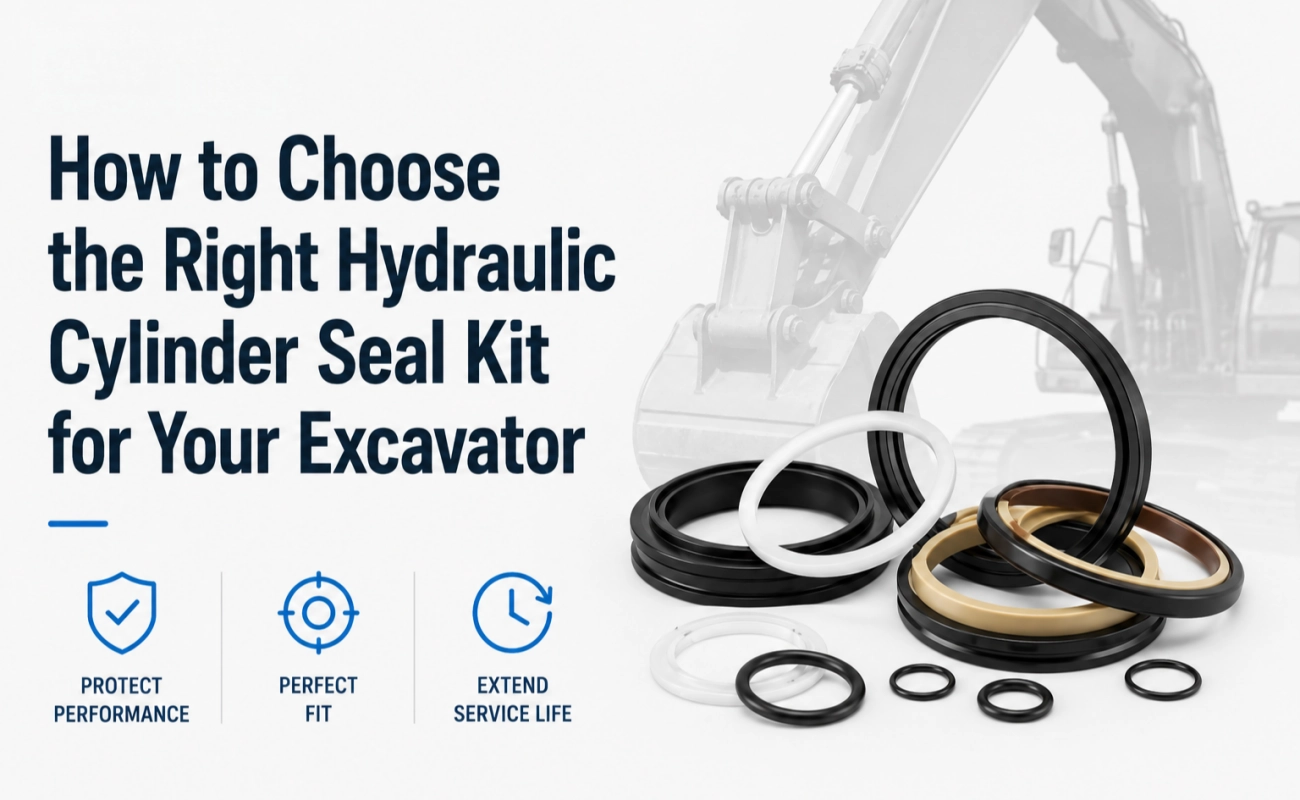
Piston seals should feature anti-extrusion back-up rings (such as step rings + O-ring combinations) or reinforced geometric profiles designed for heavy-duty use.
Application-Specific Demands
When working conditions vary, seal selection strategies must adapt accordingly.
Hydraulic Breaker: Extreme Vibration and High-Heat Resistance
Breaker systems operate under intense vibration and rapid temperature rise, requiring seals that excel in both heat and impact resistance.
- High-Temperature Resistance:
Breakers cause rapid hydraulic oil heating, drastically shortening NBR lifespan. FKM or HNBR (Hydrogenated Nitrile Rubber) are preferred for better thermal stability. - Impact Resistance:
Piston seals must provide excellent cushioning and vibration absorption to prevent seal deformation or damage under heavy shock loads.
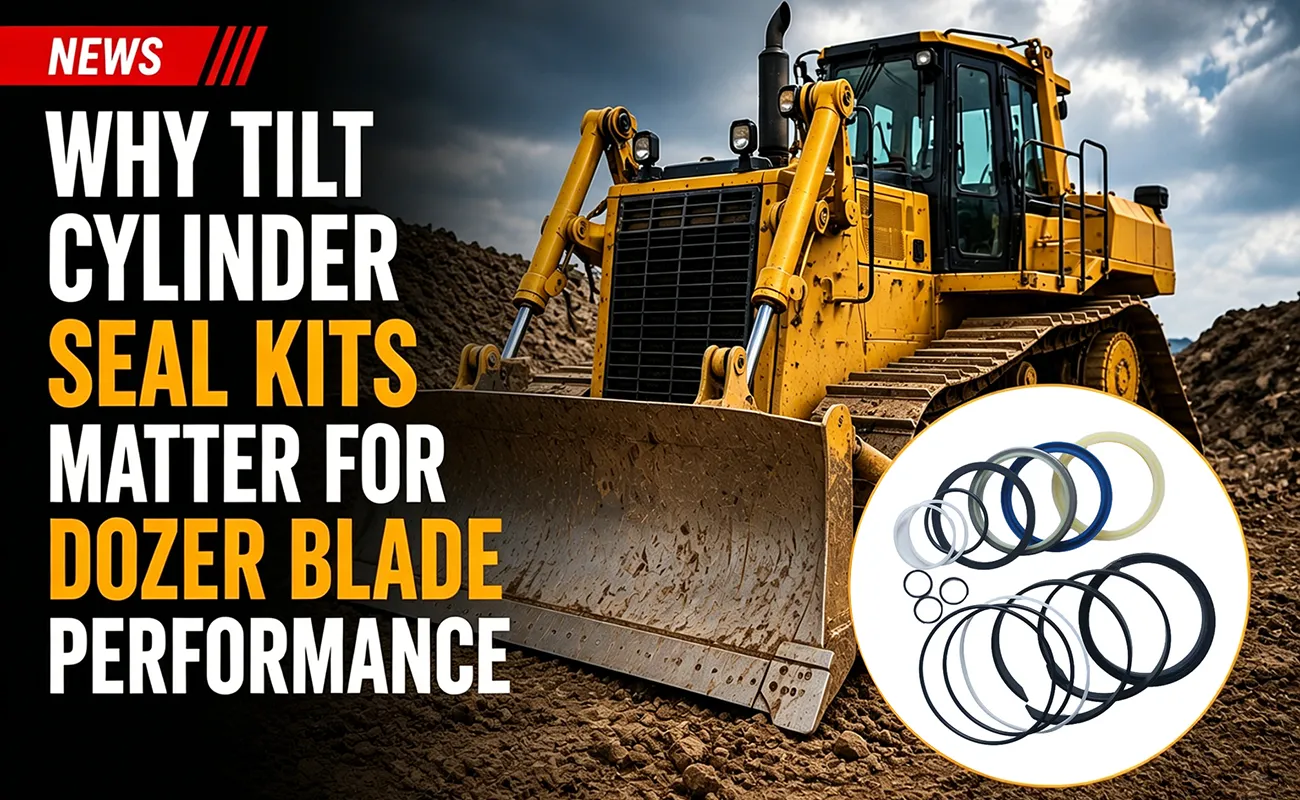
Bulldozer: Long-Term Heavy Load and Dust Protection
Bulldozers work in muddy, dusty, and heavy-load environments, placing unique demands on both their travel systems and blade cylinders.
- Travel System Seals (Floating Seals):
Bulldozer final drives and track drives use floating seals extensively. Pay attention to seal face finish and material hardness—critical factors for long-term durability and contamination prevention. - Blade Cylinders:
Require strong dust- and oil-wiping performance. Multi-lip wipers (such as WAI, DKB) are recommended to prevent mud or sand ingress and protect the piston rod and main seal.
Common Mistakes and Professional Advice
1. Mistake #1: Focusing Only on Size, Ignoring Material
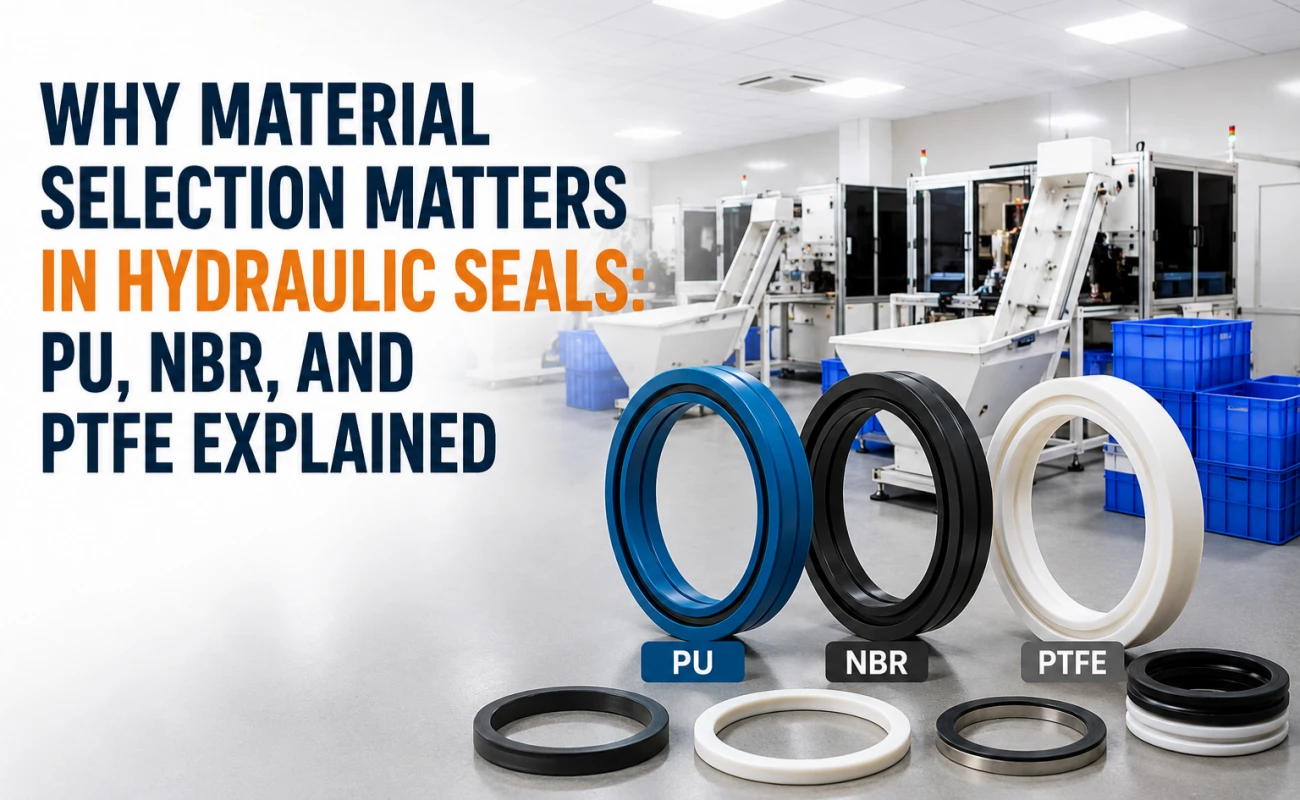
Two seals of identical size may perform dramatically differently depending on material. For mining or heavy-duty applications, avoid standard NBR; instead, select FKM or PU (Polyurethane) for better resistance to heat and hydrolysis.
2. Mistake #2: Blindly Pursuing “Hardness”
Hardness (Shore A) is not the sole indicator of seal quality. Excessive hardness can increase friction and heat, and even reduce sealing at low pressure or temperature. Choose hardness based on actual conditions—piston rod seals typically range between 90A–95A.
3. Professional Selection Process
We recommend a system-driven selection approach:
- Define the Application: Is it a working cylinder, travel motor, or breaker?
- Assess the Conditions: What is the max pressure, temperature range, and medium type (mineral or synthetic oil)?
- Match the Structure: Choose seal profiles that best fit the OEM groove geometry.
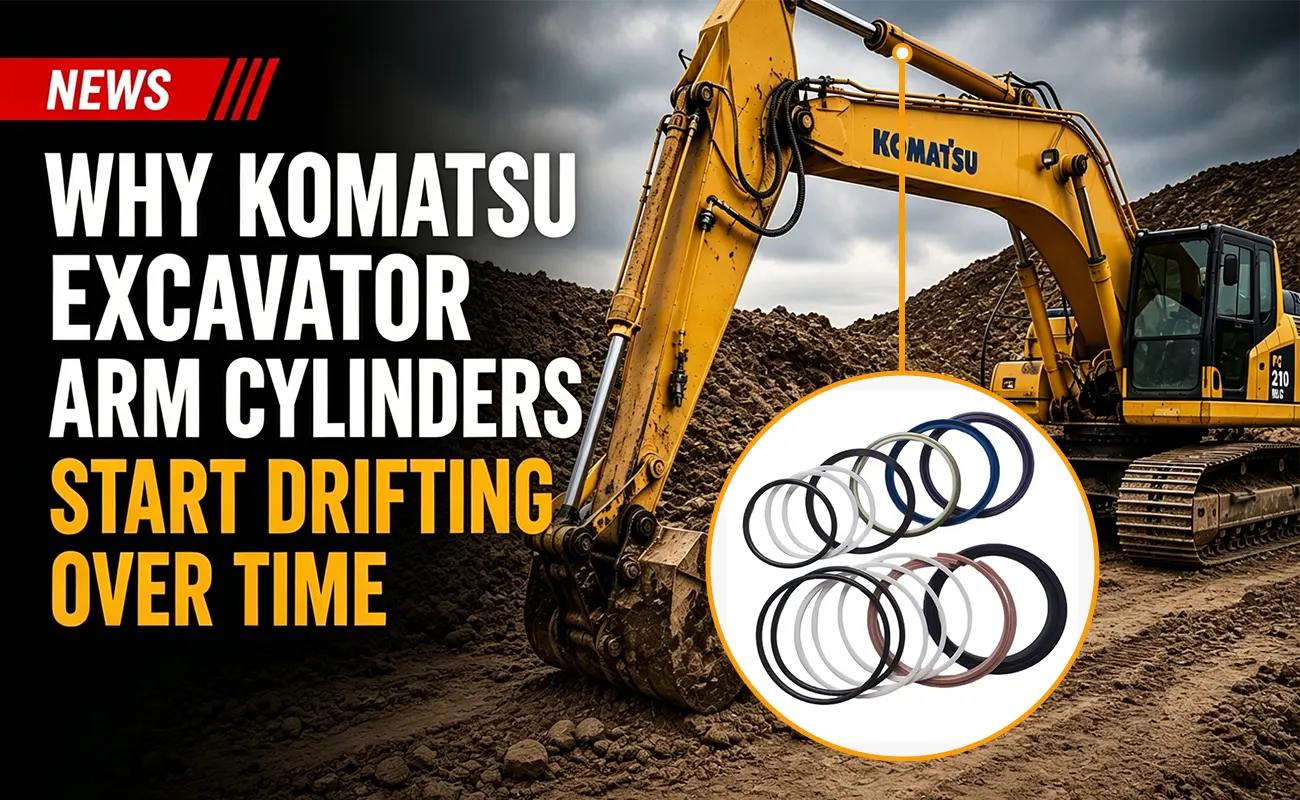
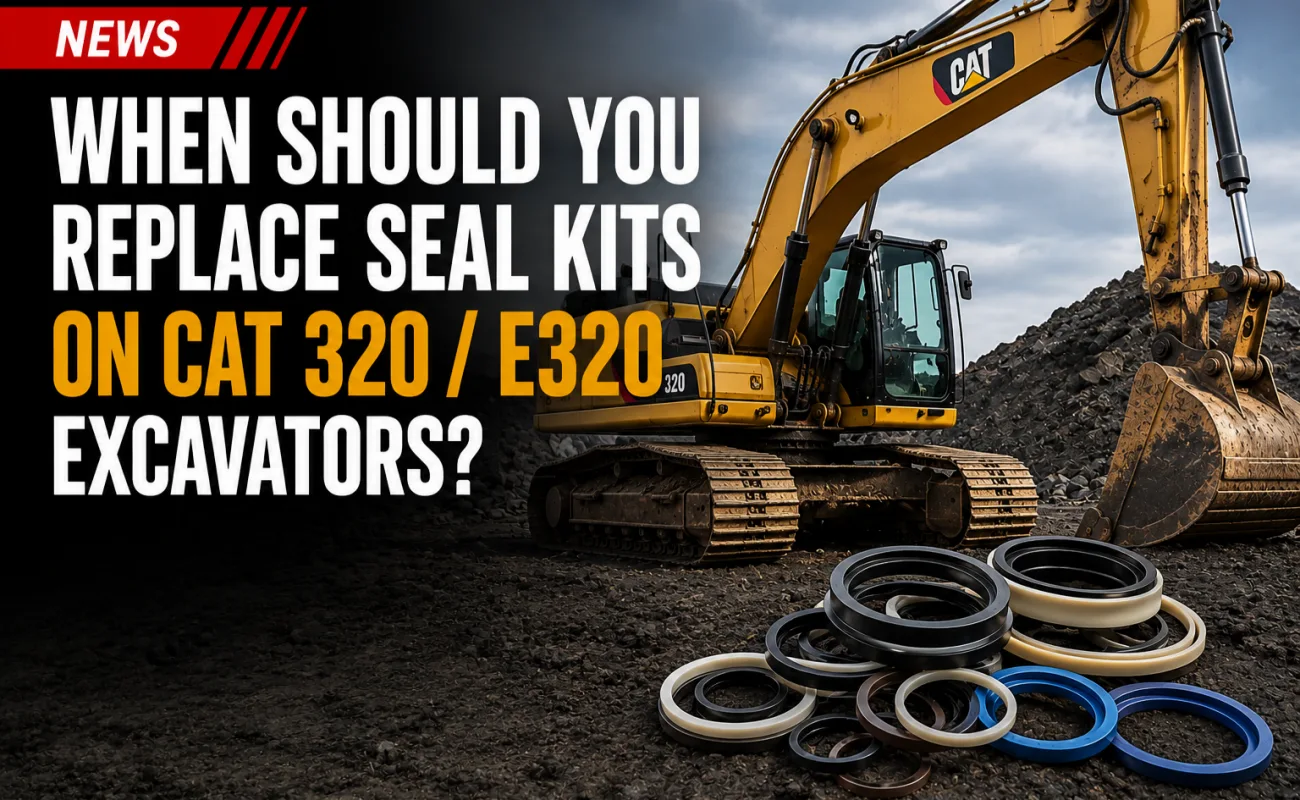
The KINTON SEALS online platform provides accurate model–material matching, helping you quickly find the right seal solutions for machines like Caterpillar 320, Komatsu PC200, or Volvo EC210.
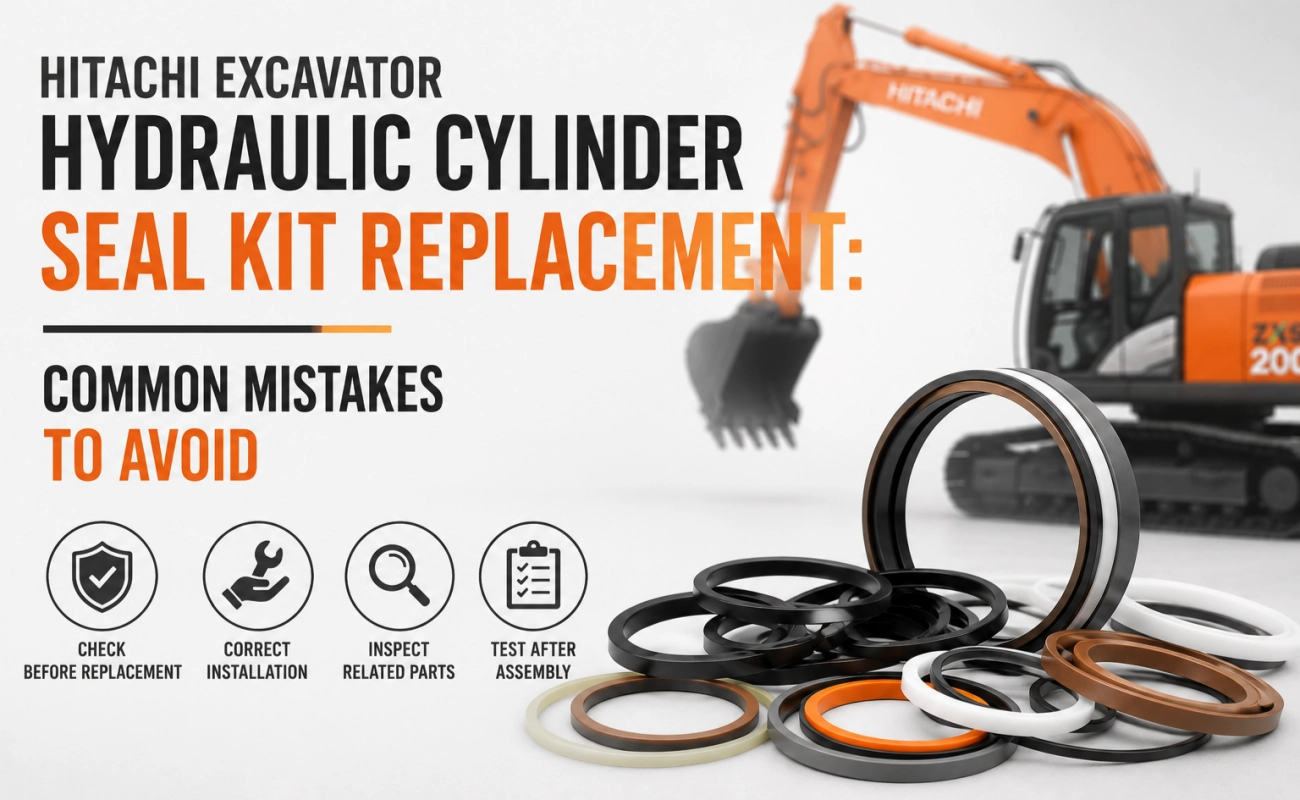
Correct seal matching is the key to ensuring long-term, high-performance operation of construction machinery.