
News
How to Choose High-Temperature and High-Pressure Sealing System for Extreme Excavator Conditions

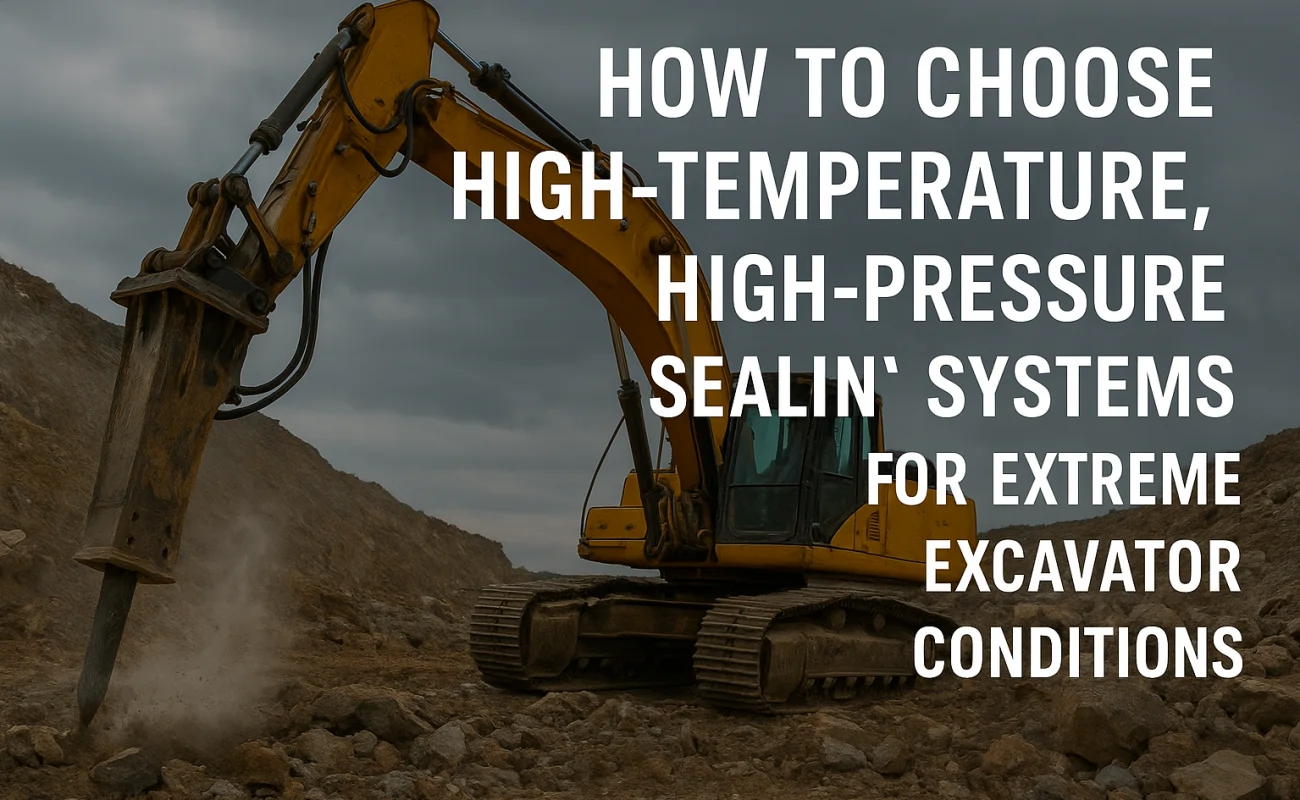
In earthmoving, mining, and demolition work, excavators and hydraulic breakers operate almost continuously in environments filled with high dust, intense impact loads, elevated temperatures, and extreme hydraulic pressure.
The stability of the hydraulic system directly determines machine efficiency and service life—and sealing components are the key elements that maintain pressure, block contaminants, and ensure safe operation.
Selecting the wrong sealing system may lead to leakage, cylinder scoring, increased fuel consumption, overheating, and even machine shutdown.
Under harsh conditions, a seal’s heat resistance, pressure capacity, and wear performance are pushed to the limit.
This article combines material science and industry standards to explain how KINTON SEALS optimizes materials, manufacturing processes, and structural designs to deliver reliable high-performance sealing solutions for excavators and hydraulic breakers.
Challenges Real Sealing Systems Face
Excavator and hydraulic breaker seals encounter multiple stress factors during actual operation:
- Heat Shock
During continuous hydraulic breaker operation, oil temperature can rapidly climb beyond 120°C.
Common rubber materials age, harden, deform, and quickly fail under such thermal impact. - High Pressure & Pressure Cycling
Hydraulic cylinders repeatedly experience pressure peaks, especially in boom and arm cylinders, which often endure 25–35 MPa dynamic loads. - Heavy Dust & Abrasive Contamination
Dust and abrasive particles in mining sites, quarries, and tunnel jobs accelerate seal wear once they enter the system. - Low Temperatures & Rapid Temperature Changes
Winter operation can cause seals to harden, lose elasticity, and reduce rebound capability, weakening sealing performance.
In extreme environments, material selection and structural design directly determine sealing reliability.
Material Science: Choosing the Right Material Is the Foundation
To adapt to diverse working conditions, KINTON SEALS performs extensive testing and formulation optimization on sealing materials. Key materials include:
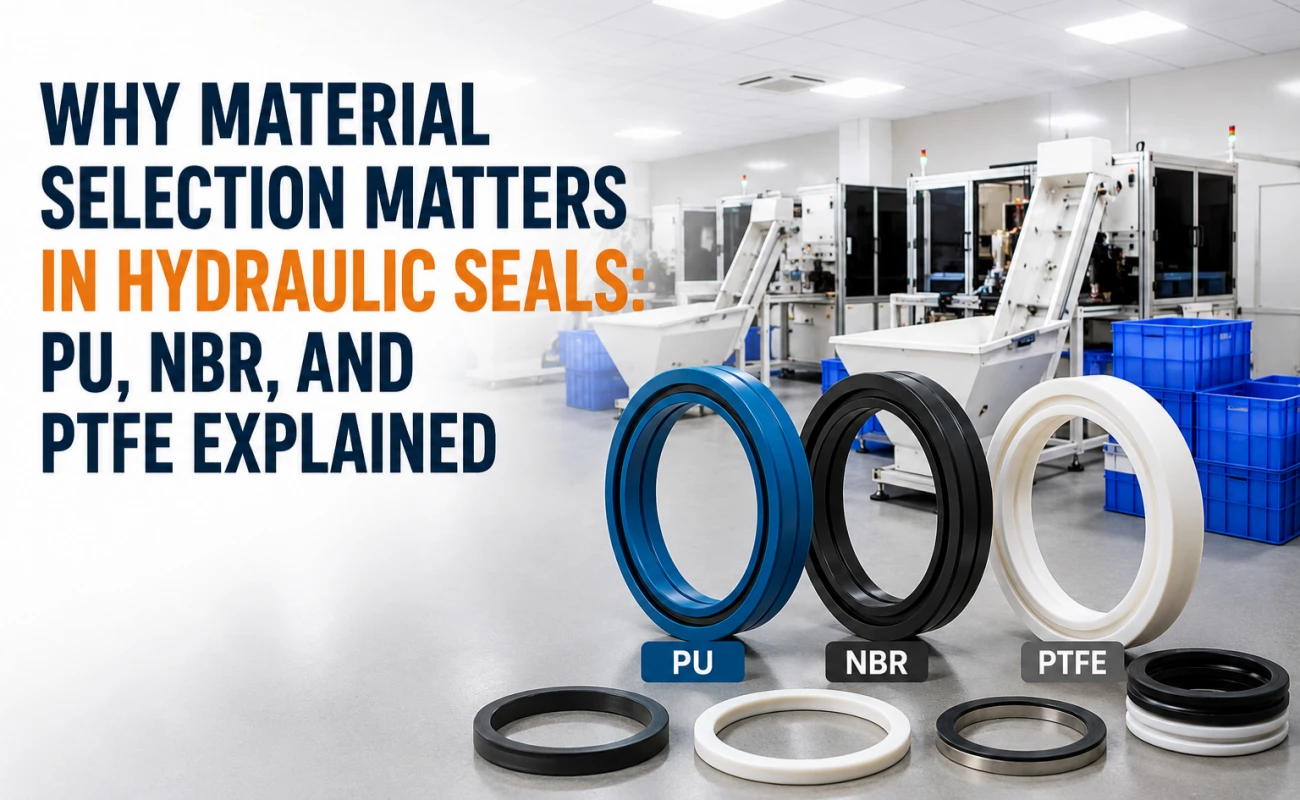
1. PU (Polyurethane) — Outstanding Wear & Extrusion Resistance
Best suited for high-pressure, high-frequency motion.
Advantages:
- Excellent wear resistance
- High tear strength
- Strong rebound performance for rapid hydraulic cycling
Typical Applications: piston seals, U-seals, buffer seals.
2. NBR (Nitrile Rubber) — The Essential Material for Standard Hydraulics
Advantages:
Reliable oil resistance
Cost-effective
Suitable for standard hydraulic temperature ranges
Limitations:
Performance decreases under high temperature and high pressure.
3. FKM (Viton) — One of the Best Choices for High Temperature & High Pressure
Advantages:
Withstands temperatures up to 200°C
Excellent oil and chemical resistance
Maintains elasticity at high temperature
Applications: high-temperature cylinders, hydraulic breaker seals.
4. PTFE (Polytetrafluoroethylene) — Designed for Extreme Environments
PTFE is an irreplaceable choice for hydraulic breakers and ultra-high-pressure systems.
Advantages:
- Ultra-low friction
- Broad temperature range (–55°C to 250°C)
- Exceptional wear and pressure resistance
- Chemically inert and unaffected by hydraulic oils
Applications: dust seals, guide rings, composite seals, high-pressure sealing sets.
KINTON SEALS enhances these materials through hardness adjustment, filler reinforcement, and advanced surface treatment, ensuring each seal matches real working conditions—such as extrusion-resistant PU blends and fiber-reinforced PTFE.
Sealing Performance Standards
To ensure stable performance in extreme environments, KINTON SEALS follows industry standards and supplements them with its own enhanced requirements.
Key Performance Criteria
- Extrusion Resistance Testing
Crucial for high-pressure environments such as arm cylinders and hydraulic breaker main cylinders. - Dynamic Wear Life Testing
Simulates over 2 million reciprocating cycles to verify long-term stability without cracking or deformation. - High-Temperature Aging Tests
Applied especially to FKM and PTFE seals to evaluate long-term thermal stability. - Contaminant Exclusion Testing
Essential for breaker dust seal groups, which prevent foreign particles from entering cylinder chambers.
KINTON SEALS Structural Design Optimization
Beyond materials, structural engineering significantly affects sealing performance.
KINTON SEALS enhances reliability through:
- Double-Lip and Stepped Seal Structures
Improved oil film retention and reduced leakage risk. - Reinforced Metal Insert Structures
Greater stability under high pressure. - Specialized Cross-Section Designs
Enhanced rebound strength and extrusion resistance during pressure fluctuations. - Composite Seal Systems (e.g., PTFE + O-Ring)
Ideal for high temperature, high pressure, and high-speed reciprocating motion.
Why Professional Sealing Systems Are Essential for Extreme Conditions
As demands for high-temperature and high-pressure resistance increase, sealing components are no longer “small parts”—they directly influence machine reliability and downtime costs.
Choosing KINTON SEALS Brings Clear Advantages:
- Optimized material systems designed for extreme conditions
- High-standard and consistent manufacturing processes
- Validation based on real working conditions
- Full sealing system solutions for excavators and hydraulic breakers
(boom cylinders, arm cylinders, breaker main cylinders, and more)
For machines exposed to intense heat, pressure, and dust loads, high-performance sealing systems significantly reduce risks such as leakage, downtime, and increased fuel consumption—ensuring the equipment can “work with confidence even in the harshest environments.”