
News
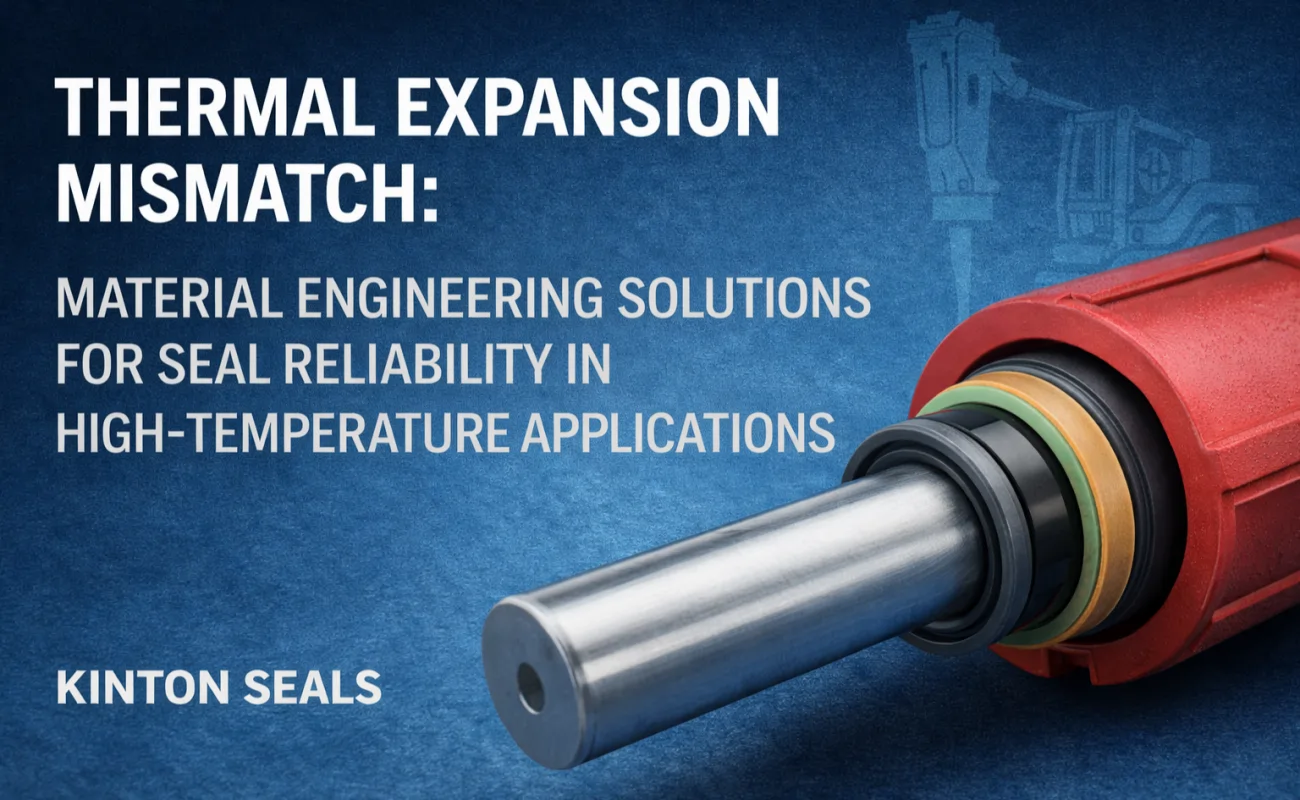
Thermal Expansion Mismatch: Seal Reliability Solutions for High-Temperature Applications

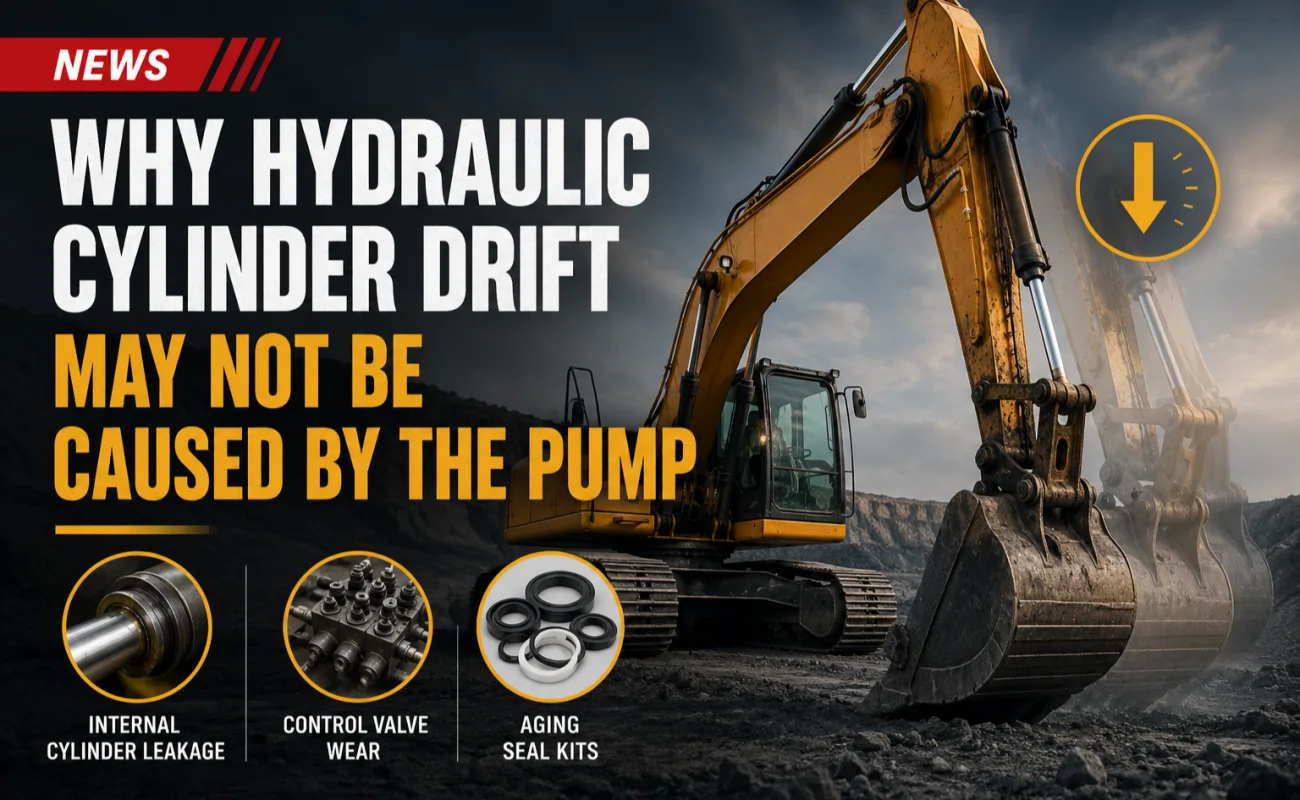
Under extreme operating conditions such as high temperature, high pressure, and continuous heavy loads, one of the most common yet often overlooked risks in hydraulic systems is the difference in thermal expansion between metal components and sealing materials.
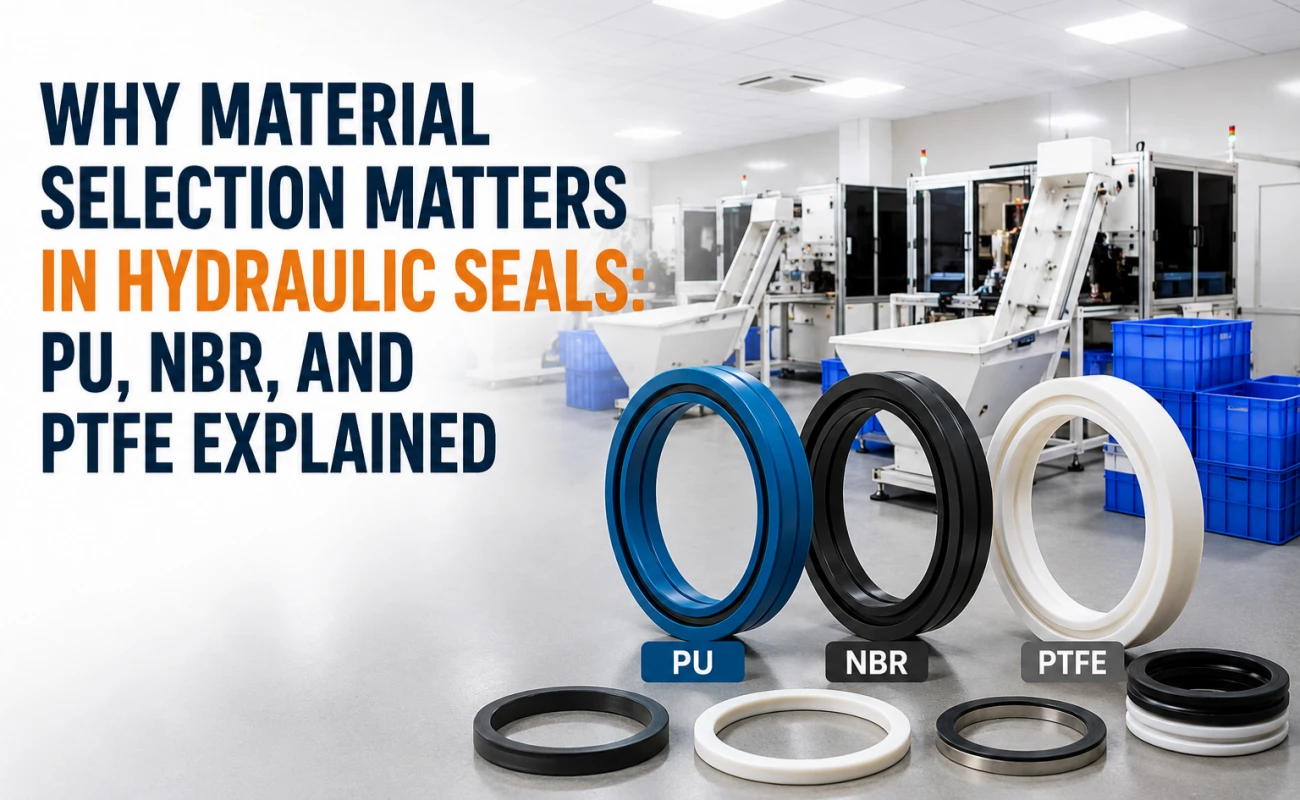
Metals such as steel and cast iron expand in a relatively predictable, linear manner as temperature rises. In contrast, sealing materials — including rubber, polyurethane (PU), and PTFE — exhibit far more complex expansion behavior. In some cases, expansion rates even differ by direction.
When these two material types are exposed to heat within the same assembly, dimensional mismatch can occur, triggering a range of sealing failures such as seizure, extrusion, lip inversion, and loss of sealing stress.
For construction machinery — especially hydraulic pumps, motors, and hydraulic breakers operating under high-temperature conditions — maintaining stable sealing performance across a wide temperature range is a shared challenge for both material engineering and structural design.
Real Engineering Problems Caused by Thermal Expansion Differences
During continuous high-temperature operation, metal cylinders, piston rods, and seal grooves expand along with rising temperatures. Seals, however, do not simply expand more — they also undergo changes in volume, elastic modulus, and compression set simultaneously.
This leads to several typical failure scenarios:
- Metal expansion < Seal expansion
The seal experiences excessive compression and may be forced into clearance gaps, causing shear damage or edge nibbling by hydraulic oil. - Metal expansion > Seal expansion
Micro-gaps form between the seal and groove, reducing sealing force and resulting in intermittent leakage. - Repeated temperature cycling
Compression set accumulates in the seal material, preventing full elastic recovery when temperatures fluctuate between hot and ambient conditions.
These phenomena are especially pronounced in applications such as hydraulic breakers with high-frequency impact loads. They are also frequently misdiagnosed as issues related to poor material quality or improper installation.
Controlling Volume Stability and Elastic Stress
Solving thermal expansion mismatch requires more than simply selecting “heat-resistant” materials. The key lies in ensuring volume stability and elastic stress stability throughout temperature changes.
KINTON SEALS addresses this challenge through coordinated optimization of material formulation, molecular structure, and manufacturing processes.
Precise Control of the Coefficient of Thermal Expansion (CTE)
The CTE of sealing materials is typically several times — or even more than ten times — that of metals. To manage this, high-performance fillers, heat-resistant reinforcements, and low-expansion base polymers are incorporated into material formulations.
This approach smooths the volume change curve between 0°C and 150°C, preventing sudden expansion spikes that would otherwise concentrate structural stress.
For example:
- Optimized NBR exhibits a more linear expansion rate at elevated temperatures
- Modified PU maintains low expansion between 80–120°C
- Specialized PTFE composite structures retain near-constant dimensions under high heat
These improvements allow seals to remain securely seated within grooves, avoiding over-compression and extrusion damage.
Maintaining Elastic Modulus and Resistance to Compression Set
Volume stability alone is insufficient if the seal loses elasticity under heat, resulting in a gradual loss of sealing stress.
Through molecular chain optimization, low-volatility additives, and high cross-link density processing, KINTON SEALS ensures that seals retain meaningful rebound capability even at elevated temperatures.
This enables:
- Stable sealing in pump housings operating at 100–120°C, without softening-related extrusion
- Partial shape recovery after cooling, reducing leakage that often appears after repeated thermal cycling
Reducing Groove Risk Caused by Thermal Expansion
Beyond material selection, seal geometry and groove design play a critical role in high-temperature adaptability.
KINTON SEALS fine-tunes lip angles, support positions, and backing structures to ensure consistent stress distribution across varying temperatures.
Examples include:
- Optimized lip pre-load angles to stabilize sealing force during thermal fluctuations
- Additional PTFE or POM backup rings in high-extrusion-risk zones
- Adjusted groove clearances to ensure seals remain within safe deformation limits after expansion
These structural-level optimizations significantly reduce extrusion damage and micro-abrasion caused by thermal shock environments.
High-Temperature Sealing Systems for Hydraulic Breakers
For hydraulic breaker center cylinders exposed to hot oil, high-speed motion, and high-frequency impact, KINTON SEALS provides dedicated high-temperature sealing systems, including:
- High-temperature NBR / HNBR high-pressure rotary seals
- Modified PU seals for high-speed reciprocating motion
- PTFE composite high-temperature lip seals
- Heat-resistant backup rings for extrusion prevention
- Temperature-stable backing materials
These system-level combinations maintain stable dimensions, structure, and sealing force even under severe thermal fluctuation, delivering reliable performance for high-temperature, high-pressure, and high-load applications.